India has three major Kathak Gharanas, such as Banaras Gharana, Lucknow Gharana, and Jaipur Gharana. This school was a derived branch from the Jaipur Gharana.
But, do you know what makes the Banaras Gharana unique? This style involves fast footwork, energetic performances, devotional storytelling, and expressive gestures!
I feel- It is a perfect amalgamation of grace, beauty, energy, and creativity! A Kathak gharana not only represents its noble style but also shares the beauty of the deep teacher-disciple bond!
In the realms of Kathak, the word Gharana depicts a unique style and expression of this dance. In this article, we will know everything about the iconic Banaras gharana of Kathak! We will go into its origin, lineage story, major patrons, its uniqueness, and much more. So if you are a Kathak spectator, practitioner, or thinking about learning this dance form, this article is like a treasure for you! Let us not wait any longer and move ahead in the article.
Knowing Banaras Gharana Of Kathak
The word ‘Gharana’ is derived from the Hindi word ‘Ghar’ and the Sanskrit word ‘Griha’, which means home!
Gharana symbolises the ancient Gurukul system of India. Janaki Prasad and Sukhdev Maharaj are considered to be the two main founders of Banaras Kathak Gharana. Let us look into its origin in detail:
Origin
Banaras Gharana shares two genealogies through two individual blood relations. Since they are also called Janakiprasad Gharana and Sukhdev Gharana. Let us see each of them below:
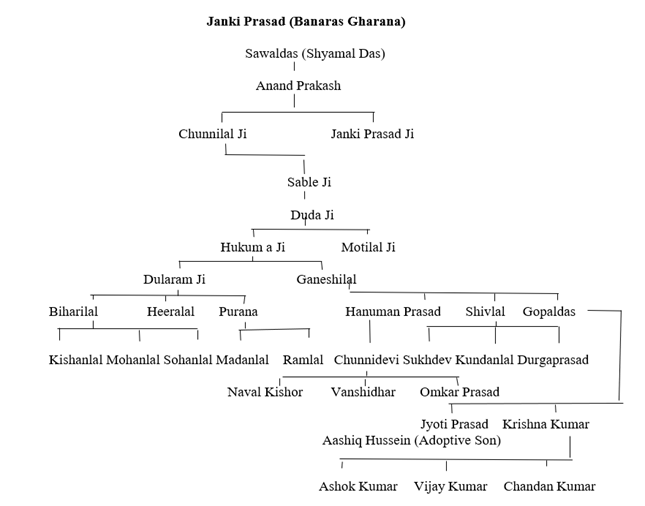
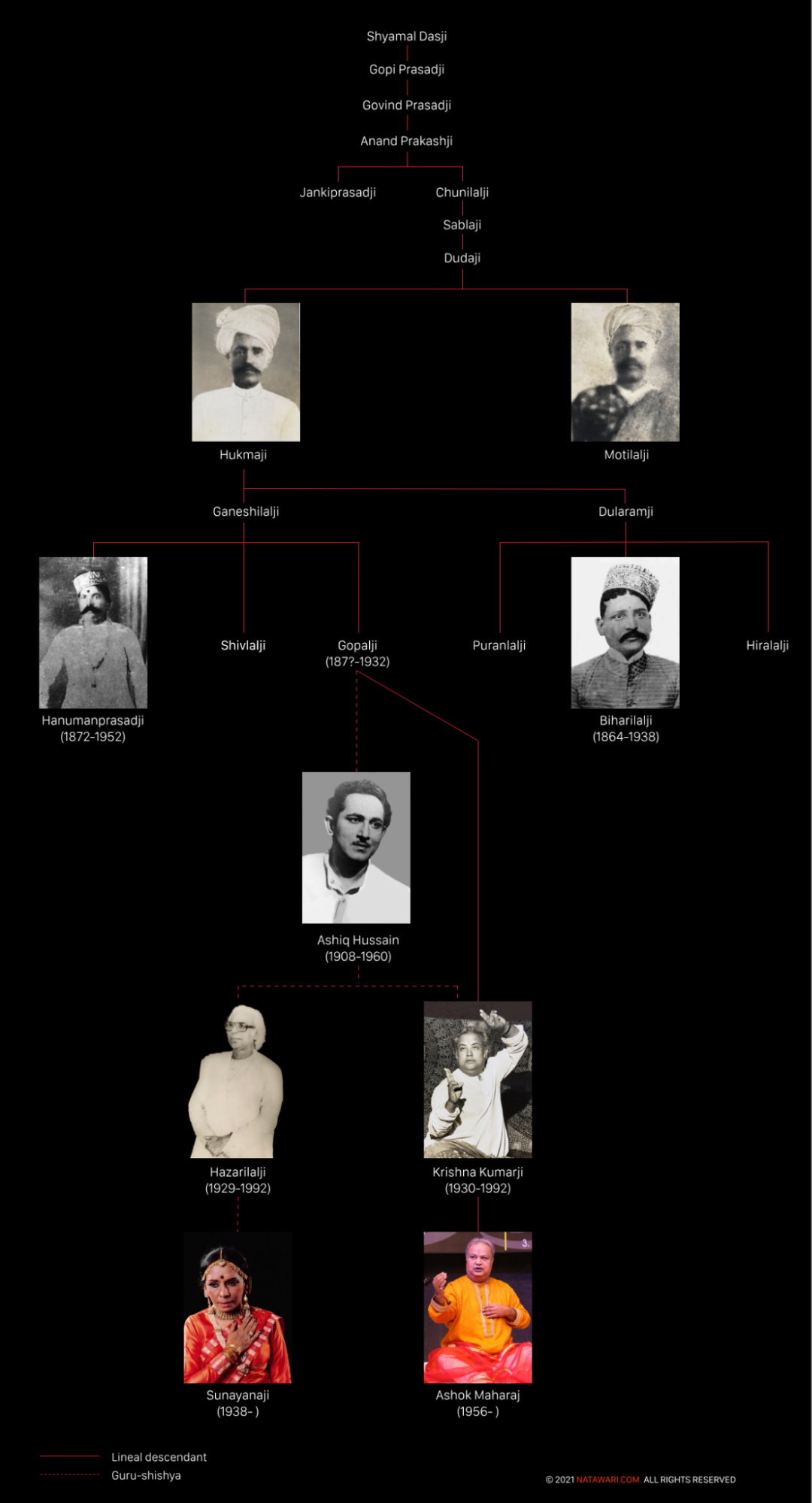
Janaki Prasad Ji was a native of Bikaner in Rajasthan. He was a part of the Sawaldas dynasty. He moved to Banaras with his brother Chunnilal. Chunnilal used to perform some folk dances as a girl. Janaki Prasad spotted his talents and trained him in Kathak for the next 15 years. The holy land of Varanasi became the place to establish this Gharana!
Janaki Prasad Ji had no children of their own. He taught this dance to his nephews and grandsons. Chunnilal Ji, Dulha Ram Ji, and Ganeshilal Ji were the three main disciples of Janki Prasad. These students later taught Kathak to their children.
Janaki Prasad Ji thought, what if dance had its own language? Because all classical dances were based on the compositions created for the tabla and pakhawaj at that time. So, he studied the richas (couplets) of the Vedas, which helped him to add new syllables to the dance dictionary.
He also created barakhadi (it is a series of twelve individual compositions). This series helps to form numerous new ones for dancers. In this way, Janaki Prasad created a foundation of the new Kathak style of Banaras Gharana!
Janaki Prasad Ji taught Kathak to Chunnilal Ji for 15 years. He was later appointed as a court dancer in Bikaner due to his amazing Kathak skills! Later, Janaki Prasad Ji also taught this dance to Sable Ji (son of Chunnilal Ji) and Duda Ji (Son of Sable Ji).
How Kathak Passed Down to the Descendants Of Janaki Prasad Ji?
Janaki Prasad Ji continued teaching his descendants even in old age. The sons of Duda ji, Hukuma ji, and Moti ji were fortunate to learn Kathak from their great-grandfather! The two sons of Hukuma Ji, Dulharam and Ganeshilal, also received teachings of Kathak.
Dulharam taught classical music to his three sons, Puranlal, Hiralal, and Biharilal. But he chose to stay at Kashi for employment. Biharilala Ji became the court dancer for Holkar Maharaj of Indore! The three sons of Biharilal Ji were Kishanlal Ji, Mohanlal Ji, and Sohanlal Ji. Kishanlal ji learned Kathak in Mumbai. Meanwhile, his other two brothers went to Dehradun for training.
Dularam’s third son, Puranalal, contributed his life to this dance. His two sons, Madanlal and Ramlal, also learned Kathak, but they stayed at Patiala city for work.
Hukuma Ji’s second son was Ganeshilal ji. He had three sons- Hanuman Prasad, Shivlal, and Gopaldas. Out of them, Hanuman Prasad ji was the royal dancer/court dancer in the courts of Jammu, Patiala, Bikaner, and Nepal. His daughter was Chunnidevi. She had three sons- Navalkishore, Vanshidhar, and Omkarprasad. These siblings promoted Kathak in Delhi.
Ganeshilal’s second son was Shivlal. He was a professional Tabla player and served in the court of Raigarh King Chakradhar Singh. Shivlal also had three sons- Sukhdev and Durgaprasad (became businessmen), and Kundanlal learned Kathak.
Ganeshilal’s third son was Gopaldas. He learned Kathak, and he moved to Lahore, Patiala. Gopaldas taught this sacred dance skill to his friend’s son, Bhure Khan. Later, he adopted that kid and changed his name to ‘Jyoti Prasad’. Gopaldas had another son, Krishna Kumar. He was fond of Kathak. So, his brother Jyoti Prasad and his uncle Hanuman Prasad taught him this art!
Later, Krishna Kumar also had three sons- Ashok Kumar, Vijay Kumar, and Chandan Kumar. In this way, the teachings of Kathak were passed from generation to generation in the Janaki Prasad Lineage of Banaras Gharana!
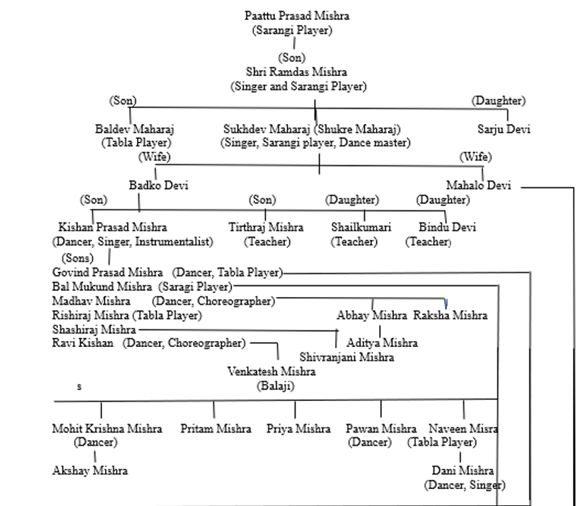

This second genealogy of Banaras Gharana is popularly known by the name of ‘Pandit Sukhdev Maharaj’. Mishras were from a noble Brahmin family in Banaras. The famous Sarangi player at that time, Pattu Prasad Mishra, had a son named Ram Das Mishra. He was also a notable Sarangi player and a Sanskrit scholar.
Shri Ram Das Mishra ji has three children- Baldev, Sukhdev, and Sarju Devi. Out of those, Sukhdev Mishra Ji became a prominent personality in Banaras due to his excellent singing, Sarangi playing, and Kathak skills!
How Did Kathak Pass In Upcoming Generations Of Sukhdev Ji?
The first wife of Sukhdev ji, Badko Devi, gave birth to 4 children- Shailjakumari, Kishan Maharaj, Bindu Devi, and Tirathraj.
Later, Sukhdev ji was appointed as a musician in the court of the Nepal King. He met Mahalo Devi, the daughter of the Rajguru of the King of Nepal. He married Mahalo Devi ji. His second marriage had five children: Alaknanda, Tara Devi, Sitara Devi, Durga Prasad (Pandey Maharaj), and Chaube Maharaj (Chaturbhuj Mishra).
A notable Kathak performer, Achhan Maharaj ji adopted Chaube Maharaj ji. Acchan Maharaj taught him dance. Meanwhile, Sukhdev ji taught music of all genres to his remaining four children.
His daughter, Alakananda, moved to Kolkata for work and taught Kathak there. His son Chaube Maharaj ji had two daughters, Jayanti Mala and Priya Mala. Chaube Maharaj’s sister, Sitara Devi, was known as the ‘Kathak queen’. She trained his two daughters as her own child did not have any interest in Kathak.
In this way, the Sukhdev Ji Maharaj’s Banares Gharana was started and elongated.
The Uniqueness of Banaras Gharana
Each Gharana of Kathak carries its own style and history. Let us see what makes Banaras Gharana unique among all three:
 The Kathak dance in the Banaras Gharana involves high-energy performances with intricate footwork (tatkaar).
The hand gestures in this dance are quite expressive with complex rhythmic patterns (Bols). Their storytelling through dance is very seamless and expressive.
Its spectators feel connected to the devotional story narrations that they observe after seeing this dance.
The spiritual references in this dance add a dynamic and holy meaning to the performances!
Gopal Ji and his son, Krishna Kumar, were known for carrying forward and spreading the rich heritage of Banares Gharana!
Dancers focus on Taal (rhythmic beats) to coordinate their dancing movements with music.
The Indian classical music instrument, Tabla, is widely used during the performances to provide beats for rhythmic tatkars!
Sukhdev Maharaj Ji composed remarkable poetic paranas to maintain the devotional aspect of Kathak. These Paranas included- Hanuman Paran, Ram Paran, Shiv Tandav Paran, etc. This added a preserving touch to the timeless essence of India's cultural heritage.
Siatara Devi started performing Kathak at the age of 5! Guru Rabindranath Tagore gave her the titles of 'Nritya Shyam Ragini' and 'Kathak Queen.’ Due to her brilliant talent, she was awarded the ‘Sangeet Natak Akademi' award in 1969.
During the Mughal period in India, these artists were able to preserve this skill. The tawaif (courtesan) culture of the Mughal era had a deep impact on Kathak dance. After the end of this period, the Gurus restarted teaching Kathak to their disciples on a broader level.
Famous Artists From Banaras Gharana Of Kathak
Let us have a glance at some of the famous artists of Banaras Kathak Gharana who preserved and spread this dancing art to the global level!
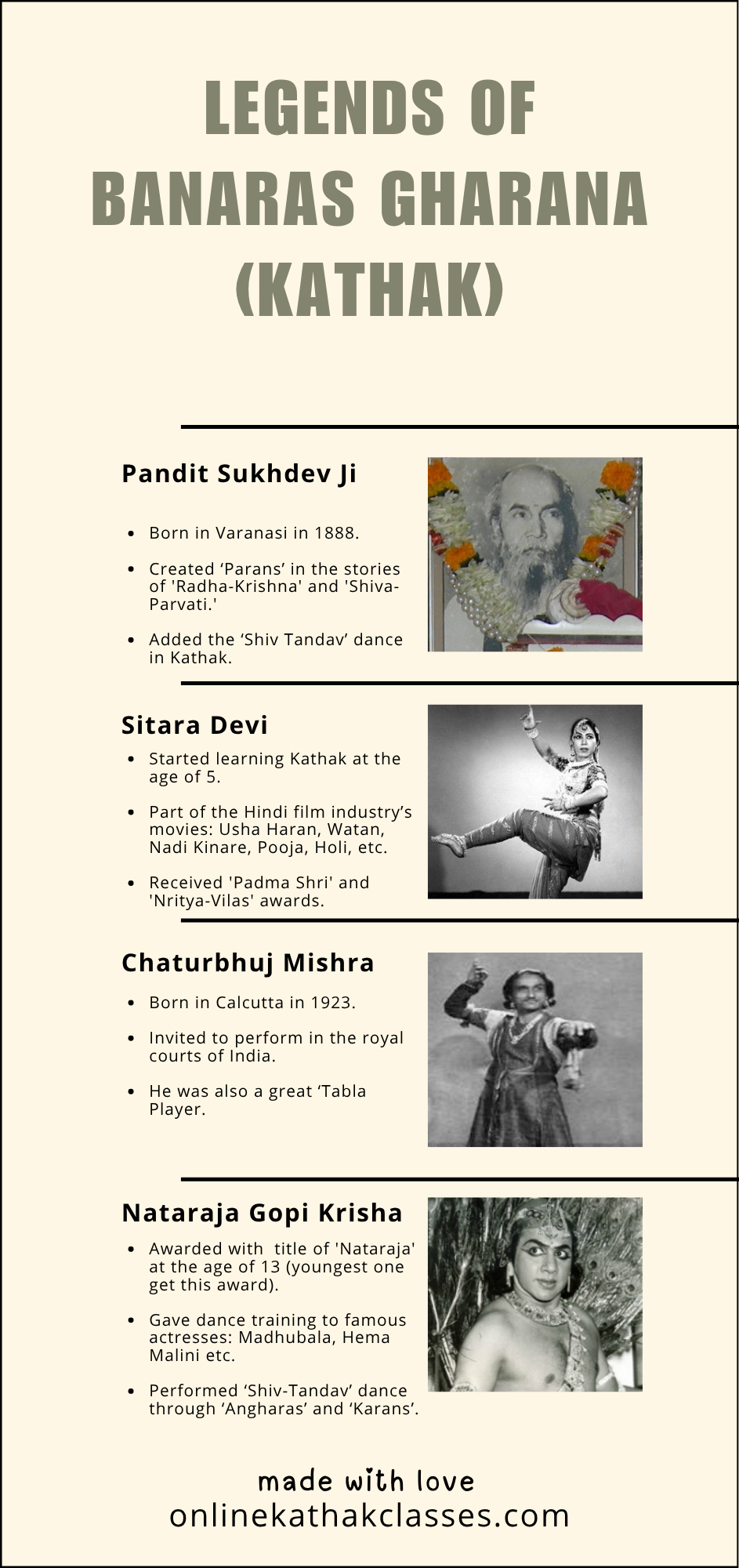
Acharya Pt. Sukhdev Maharaj Ji was born in Varanasi in 1888. He served the court of the King of Nepal. He started studying ‘Natyashastra’ after returning to Varanasi. He created ‘Parans’ in the stories of ‘Radha-Krishna’ and ‘Shiva-Parvati’. He also developed Kali Paran, Ram Paran, Durga Parab, Shiv Paran, Radha Kavitt, Hori Kavitt, etc.
Here are some of his compositions of Parans from Pt. Sukhdev Mishra Ji:
1. Shiv Paran in Teentaal
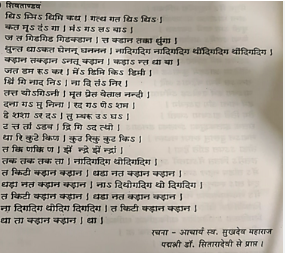
2. Shiv Nrittya Kavitt Paran In Teentaal
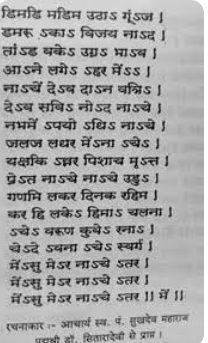
3. Maharas Paran
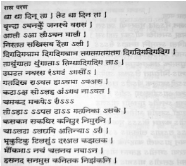
He also added the ‘Shiv Tandav’ dance in Kathak. He and his disciples used to perform Kathak in local temples. In the Mughal era, the Mughals ordered them to perform Kathak only in their courts. This ban limited the existence of Kathak to the luxurious environment of courtesans only.
During this period, he focused on teaching Kathak to his three daughters: Alaknanda Devi, Tara Devi, and Sitara Devi at a very young age. He also faced social backlash due to the influence of the Mughals and male patriarchy during that time. But he remained consistent in his work and preserved the true essence of this dance form.

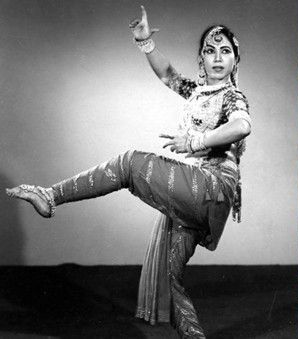
Pandit Sukhdev Maharaj Ji announced that if he had a daughter, he would make her the best Kathak dancer! Sitara Devi Ji was born in 1916 in Calcutta! She started learning Kathak at the age of 5.
Shmabhu Maharaj Ji also became her teacher when she was in Calcutta. After moving to Mumbai, she took Kathak lessons from Achhan Maharaj Ji. She was a part of the Hindi film industry’s movies, such as Usha Haran, Watan, Nadi Kinare, Pooja, Holi, Roti, Hulchul, Phool, Anjali, etc.
On 13th April, 1970, she danced continuously for 13 hours at Birla Matushree Auditorium, Mumbai, and left the audience in awe! Of course, it was a new record in Kathak!
With her dedication and impactful work in spreading Kathak on a global level, she received the ‘Nritya-Vilas’ award by the Government of Maharashtra and the ‘Padma Shri’ by the Government of India.
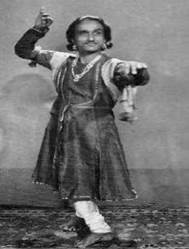
Chaturbhuj, aka Chaube Maharaj Ji, was born in Calcutta in 1923. He was the son of Pandit Sukhdev Maharaj Ji. He saw his three sisters, Alaknanda, Tara, and Sitara, learning Kathak in childhood. He also started dancing on his own.
Acchan Maharaj Ji noticed his dance and asked his father if he could teach Chaube Maharaj. The teachings of Acchan Maharaj gave him a formal education. With his spectacular dance skills, he was invited to perform in the royal courts of India! He was also a great ‘Tabla Player.’ His sister Tara Devi used to perform Kathak with the beats of his Tabla. He could present hard rhymes with ease and explained the nuances of dance to her.
Tara Devi Ji gave birth to Gopi Krishna in 1933 at Kolkata. He got Kathak lessons from Acchan Maharaj Ji, Shambhu Maharaj Ji, and Lacchu Maharaj Ji. But, his Kathak also had the spectacular essence of Kathak from his grandfather, Pt. Sukhdev Maharaj Ji!
When he was 13, Gopi Krishna was awarded the title of ‘Nataraja’ in the Bengal Conference. Probably, he was the youngest one to get this award! He also went to the school of Sri Raj Rajeshwari Bharat Natya Kala Mandir and learnt the ‘Bharatnatyam’ dance from Guru Mahalingam Pillai and Govind Raj Pillai.
He was fond of the Hindi film industry and made his first success in V. Shantaram’s ‘Jhanak Jhanak Payal Baje’. He also gave dance training to famous actresses such as Madhubala, Asha Parekh, Hema Malini, Meena Kumari, Geeta Bali, Vyjayanthimala, Waheeda Rehman, and so on!
He was the one who performed ‘Shiv-Tandav’ dance through ‘Angharas’ and ‘Karans’. He was famous for using intricate facial expressions, especially eyebrows, and performing Dugun, Tigun, Chaugun, and Tah.
FAQs
Who Is The Founder of the Banaras Gharana of Kathak?
Pandit Janaki Prasad and Pandit Sukhdev Mishra are the two main founders of Banaras Gharana of Varanasi, India.
Which god is described in the dance of the Banaras Gharana of Kathak?
The devotional stories of lord Krishna, lord Shiva, Maa Durga, Shri Radha Rani, etc., are depicted in the Banaras Gharana of Kathak. The references for these stories are mainly taken from the holy texts of sacred books such as the Bhagavat Purana, Shrimad Bhagavat, Geeta, the Shiv Purana, etc.
Conclusion
Banaras Gharana of Kathak has had a historical impact due to its devotional essence. Imagine what would have happened if Pandit Janaki Prasad Ji had not studied Natya Shastra? Pandit Sukhdev Maharaj Ji did not create Paranas? Thanks to these founders, who dedicated their whole lives to teaching and spreading Kathak. They faced and broke the male patriarchy, social backlash from orthodox communities, and preserved Kathak in tough Mughal and British empires. Their descendants, such as Chunnilal ji, Sable Ji, Gopi Krishna Ji, Sitara Devi Ji, etc., have played a great role in teaching and spreading this dance to many disciples!
Whether it is intricate Mudras- hand gestures, Navrasas- 9 lively facial expressions, Taals, Bols, or Tatkars, the Banaras Gharana of Kathak has made its unique impact on the world! This Gharana has maintained its legacy throughout the generations in preserving this sacred dance from the Sanskrit scriptures! Kathak is an art of joy and passion that you can experience from within when you surrender your heart to it! So, if you want to learn it, experience its holy essence first!