Rapid spins, toughest Tatkaars, and great storytelling of bravery of the Rajput culture via dance! Guess who I am talking about?
Yes, you are right! I am talking about the legendary Jaipur Gharana of Kathak.
A Gharana is a distinct style or school of dance that is passed from generation to generation from teacher to students! Kathak is a living example of classical dance that has carried India’s heritage from ancient times! People who performed this dance were the ‘Kathakars’! Kathakars represented India’s rich heritage and devotional stories through their performances.
Kathak has three main Gharanas with Guru-Shishya tradition (teacher-student discipleship). Banaras Gharana is the oldest one. The other two main gharanas are: Lucknow and Jaipur! Raighar is the newest found and fourth gharana of Kathak. Today, we will be discussing the Jaipur Gharana of Kathak! We will glance into its history, its unique characteristics, and its distinct features as compared to the other two gharanas!
So, let us move ahead and learn more about them in detail:

History Of Jaipur Kathak Gharana
A famous Shiva Tandava (vigorous dance inspired by Lord Shiva) dancer named Bhanuji once visited Vrindavan. It is a holy place in Uttar Pradesh, North India, where Lord Krishna lived! He was inspired by Lord Krishna and taught the ‘Natvari Nrittya’ in Vrindavan to serve his devotion.
Bhanuji is said to be the main founder of Jaipur Kathak Gharana because he seeded the main idea of Kathak in his family lineage. Other Gharanas may have evolved with time, but we can still witness the authentic old style of kathak in this gharana! One can sense the influence of the Rajputi style of Kathak with supremacy of male dancers.
From older times, the Kathakars referred to stories of Lord Krishna from epics, such as Geeta, Bhagavat Purana, Shrimad Bhagwat, etc. They perform on lord Krishna’s stories of Makhan Chori, Radha Krishna Ched Chad, Giraraj Parvat, Draupadi Chirharan, etc.
Apart from lord Krishna, they also perform on lord Shiva’s Tandav, Lord Ram’s Ahilya Udhar, etc. in local temples and holy places.
Bhanuji was a great devotee of lord Shiva. He taught his dance skills to his son Malu Ji. Maluji taught this dance to his sons, Laluji and Kanhuji. These two brothers were inspired by Lord Krishna.
Kanhuji specialized in lasya in Vrindavan. This skill helped him to add a graceful and spiritual expression to the Kathak dance, which he learned from his father.
These two brothers returned to Jaipur, refined their techniques of this dance form, and started a new gharana.

People used to call these two brothers ‘Devpari ka Jodaa.’ They were appointed as dancers for the court of Jaipur. Due to patronage of royalty, this gharana flourished for generations.Initially, this dance form was performed in temples in devotion to gods and goddesses. Jaipur kings were strong believers in Hinduism. They supported folk music, classical dances, and art from centuries. Out of them, the Rajputi Kachchawa kings patronized Kathak.
Maharaja Man Singh I supported poetry, music, and art in his reign. His brother, Maharaja Madho Singh, was a patron of the Sanskrit scholar from Deccan, Pundlik Vitthal, who developed Ragamanjari.
Later, their descendant Maharaja Sawai Jai Singh II, who reigned between 1699 and 1743, established Gunijankhana. He appointed 750 artists from music, dance, arts, poetry, etc., out of which Kathak dancers were an integral part.
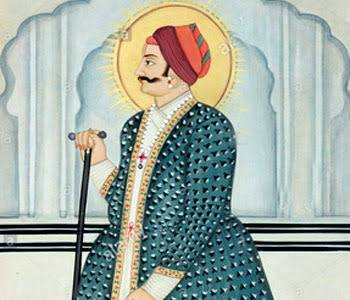
Gunijankhana was a place where artists used to perform. This king patronized and appointed Laluji and Kanu Ji as kathak dancers for his court. With this support, the temple kathak performances got a touch of royal sophistication.

Soon, traditional Kathak, which was performed as a devotional ritual in temples, was transformed into a performing art under the patronage of Sawai kings.
These kathak performers used to perform daily to entertain royal members. They also performed at Govind Deo temple for temple rituals.
In 1895, Maharaja Sawai Madho Singh II invited Kathak exponents from Jaipur, Lucknow, and Banaras. He hosted a pivotal meeting to codify these distinct identities of Kathak style. After that meeting, the Jaipur Gharana was officially recognized among people.
The legacy of teaching Kathak to children continued! Kanhu Ji taught Kathak to his two sons, Geedha Ji and Snehja Ji.
These siblings specialized in Shiv Tandava nd lasya (graceful feminine style) respectively. They were also appointed as court dancers. Geedha Ji’s son Dulhaji (Girdhariji) was a famous performer in Gunijankhana.

Geedha Ji’s other two descendants, Hanuman Prasad and Hari Prasad, also received kathak lessons from him. They used to perform duet songs together. Soon, they became famous by the name ‘Dev-Pari ka Jodaa’.Their descendants, Chunnilal, Shyamlal, Govardhan Ji, Durga Prasad, Jai Lal, Sunder Prasad, and many more became famous Kathak dancers in this gharana. They also received patronage and royal stipend for years from Maharaja Sawai Pratap Singh and Sawai Ram Singh.
The tradition passed from generation to generation, and then later spread to Rajput states like Udaipur and Jodhpur.
In the early 20th century, the descendants Kundanlal Gangani, Sunderlal, Narayan Prasad, and Gaurishankar took Jaipur’s Kathak gharana style to Indian institutions such as Baroda University, Delhi Kathak Kendra, etc. They institutionalized this dance form so more dancers can learn it.
In today’s times, families like Gangani, Sankhla, and many more have continued the legacy of teaching Kathak in Jaipur Gharana.
Let us see what makes Jaipur Gharana more unique than the rest of the Kathak gharanas:
 This gharana is a more technical dance form than the other two gharanas.
It involves strong beats from Pankhawaj, a traditional instrument. They perform on the beats of Parans (compositions) derived from the Pakhawaj.

Their performances include rhythmic virtuosity and powerful footwork.
They focus on intricate Talas (rhythmic cycles) and energetic spins (Chakkars). The spins have executed with speed and precision.
They can show effortless footwork on the most challenging talas, like Choutal, Rudra, Bramha, Dhamar, etc..
Their dances emphasize stutis and shlokas in praise of gods and goddesses.
They can perform on complicated compositions in various talas.
They are famous for Layakari, toughest Tatkars, and preserving old-style Kathak.Best Dancers From Jaipur Gharana
This gharana has gifted one of the most noble dancers to the world. Let us have a glance on them:
He learned Kathak from his father Pandit Chunnilal of Jaipur Gharana. He performed and spread knowledge of this dance form across the country. In 1930, he established Maharaj Bindadin School of Kathak in Mumbai.
He was honored with the Sangeet Natak Akademi in 1959 for his lifelong contribution to this dance form. Pandit Puru Dadheech, a famous Kathak guru, is his student.
At the age of 6, Geetanjali started getting formal training of Kathak. She got training from Pandit Gopi Krisha, Shri Mohan Rao Kallianpurkar, and Pandit Devi ji, from Jaipur gharana of Kathak.
She got married to Pandit Dev Lal of Jaipur Gharana. She is one of the top artists on Indian TV channel, Doordarshan, and Indian Council for Cultural Relations, New Delhi.

Geetanjali is famous for her Laykaari and Abhinaya in Kathak. She choreographed Kathak for movies. In 2007, she received the Sangeet Natak Akademi Award.
She has bagged notable titles such as ‘Bharat Gaurav’, ‘Nrittya Sharada ’, ‘Kala Shiromani’, and much more! And, she also received awards such as the ‘Indira Gandhi Priyadarshini Award’, ‘Jijabai Women Achievers Award’, ‘Acharya Kala Vipanchee’, etc.!

He is known for his innovative dancing style and technical wizardry of performance. He is the disciple and son of Pandit Kundanlal Gangani of Jaipur Gharana.
With the family’s tradition, he started learning Kathak at the age of 4. In 1983-84, he completed his graduation from the Kathak Kendra, Delhi. He started choreographing dramas, music albums, classical songs, plays, etc.
He also has produced popular thematic items like Raag Vistaar, Leele-Varnan, Sargam, Zhalak, Srijan, Maharaas, Parikrama, etc. In 2003, he received the Sangeet Natak Akademi Award for his valuable work in Jaipur Kathak gharana!
FAQs
Who Are The Famous Kathak Dancers From Jaipur Gharana?
Shashi Sankhla, Rajendra Gangani, Mangala Bhatt, Kundan Lal Gangani, Durga Lal- Devi-Lal, Puru Dhadeech, etc., are the most famous dancers in Jaipur gharana.
Who Are The Main Patrons Of Jaipur Kathak Gharana?
Jaipur’s Rajputi Kachchawa kings such as Maharaja Sawai Jai Singh, Sawai Madho Singh, Sawai Man Singh, etc., were the major patrons of Kathak.
Conclusion
Jaipur Gharna stands unique in its own way! The dance style in this gharana is full energy, powerful moves, complex tatkars, fast spins, kavitas, and layakaris. This gharana has flourished throughout history. After the decline of Mughal rule, Jaipur became the central hub for classical dance and artists. Many Nawabs and Rajput Kings supported kathak artists!
This gharana has seen its golden days under the patronage of Rajputi Kachchawa kings of Jaipur. Pandit Bhanuji rooted the foundation of this gharana. His descendants, Kanhu Ji, Malu Ji, carried and spread it in upcoming generations. In today’s times, this gharana has lakhs of disciples!
Which things amaze you in this gharana? I would love to hear your views in the comments below!


