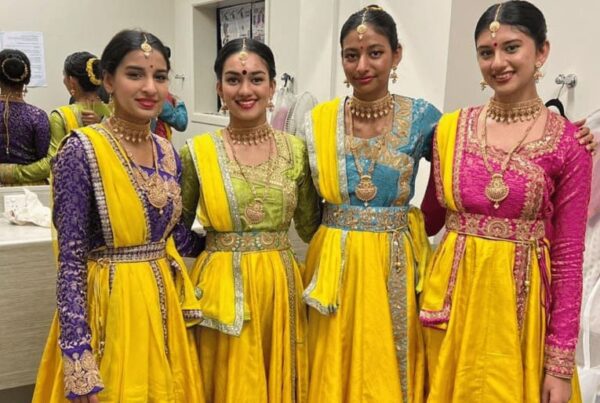
Kathak is not just a dance form! It is a sacred channel for expressing emotions and narrations from mythological epics. Kathak is not only about intricate footwork or graceful moves. It is also important to know how effectively you present your dance in terms of emotions, expressions, and body posture. And, one needs proper training of many years to excel in this part.
I am a passionate Kathak dancer. My parents enrolled me at a Kathak Institute. After that, I was unstoppable! Who knew my childhood passion would turn into a career as a professional dancer, teacher, and choreographer! If you also have a passion for this classical dance form and want to learn it professionally, this article is for you.
In this article, I have explained all Kathak levels and their exams, the right age limit, the time required to complete them, etc. So let us move ahead and know more about it:
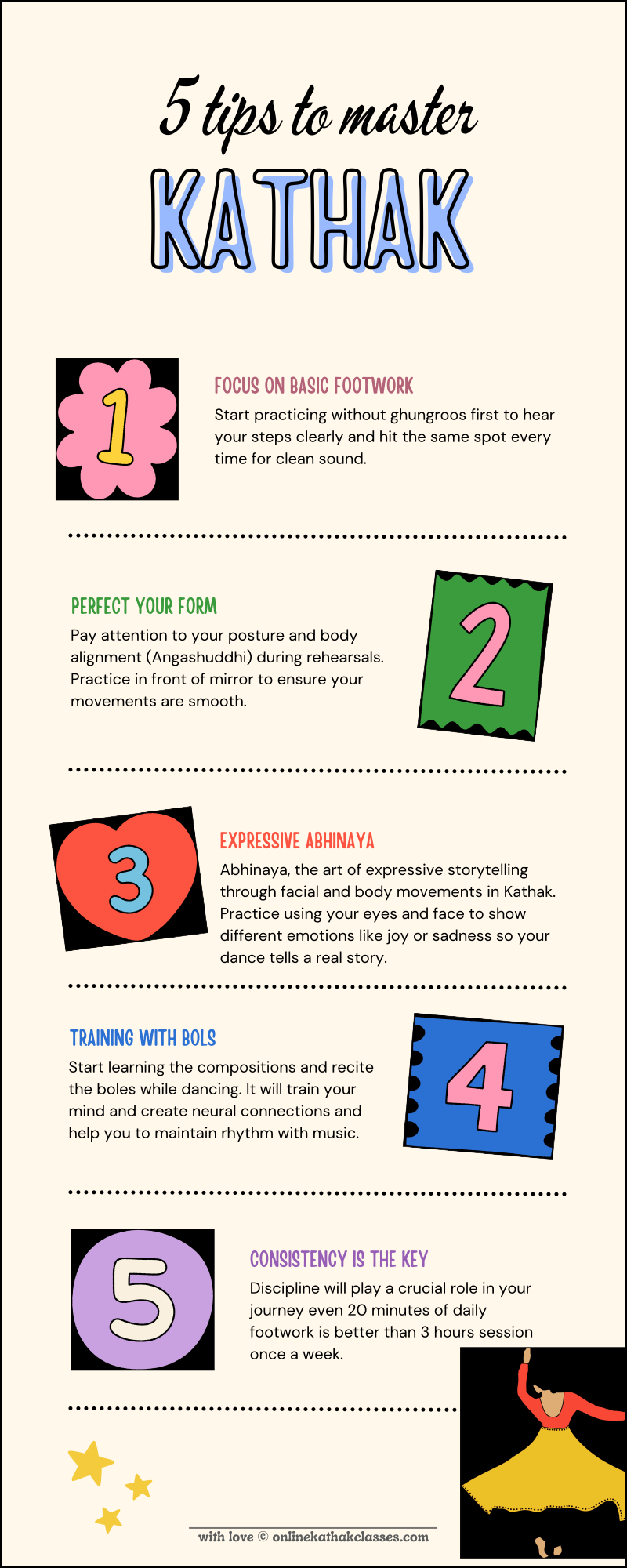
Kathak Levels and Exams
Kathak Levels
Learning Kathak takes 8-9 years. This course is divided into different levels and exams, such as:
 Prarambhik: Beginner Level
Praveshika Pratham- Elementary Level
Praveshika Purna-Pre Diploma level
Madhyama Prathama
Madhyama Purna- Diploma level
Visharad- Bachelor's Degree- Graduation level
Alankar- Master's Degree- Post-Graduation
Doctorate Ph.D.- Highest level
This beginner level includes basic techniques and rhythms. It is completed within 8 to 12 months.
What Do Students Learn At This Level?
Kathak institutes also focus on teaching the contemporary and historical significance of this dance form at the Prarambhik level. Students also learn how to recite the compositions properly, perform proper footwork and postures (bhangis).
Students also learn about basic Taals/ rhythmic cycles: Teentaal, Jhaptaal, Dadra, and Ektaal.
They get introduced to basic Kathak vocabulary, like Tatkaars (16-beat cycles), Chakkars (basic spins), Tihaais, and Tukras.
They learn about hand Mudras with meaning, and Mantras with beats. They get educated on three main gharanas, simple compositions, and storytelling through body movements (abhinaya).
Practical Training
Students practice Vandana (salutation), Amad, basic Parans, Tatkaars. They practice basic Mudras (single-hand and double-hand gestures; Asamyukta & Samyukta Hastas, resp.) and Tihaais with several Layas.
They practice simple Tatkaars with bols such as Thai Thai Tat, Aa Thai Thai Tat, and Tukras with rhythmic compositions like Dha Titi Dha Titi.
They also learn to practice simple chakkars 3-5 times on the same spot.
The foundation for this level is laid on the knowledge from the Prarambhik level. This level needs one year to complete. It is also called ‘the first level of elementary Kathak education.’
What Do Students Learn At This Level?
This level includes more complex rhythmic patterns in Teentaal. Two new kinds of Tals are also introduced in this one. Teachers teach hand gestures from the texts of ‘Abhinav Darpan’ at this stage. They also get to learn about prominent Kathak gurus.
Teachings in this level also emphasize Rangmanch Pranam, Todas, Tihaais, Tukras, etc. Students who have completed the Prarambhik level and are 9 or above are eligible to begin this level.
Students explore Laya, Matra (count within the taal), Tali (clap within the taal), Khali (silent beat within the taal), Sama (first beat of the taal cycle), Gat-Nikas, Gat-Palata, Baant, etc., of Kathak.
Practical Training
Students practice on Dadara and Kaharwa taals. They also practice Layas: Barabar, Dugun, Chaugun
They practice lessons based on Abhinay Geet. They practice embodying characters and show sentiments with their expressions and body language. Students are expected to develop skills for reciting compositions correctly.
At this level, students gain a comprehensive understanding of the elementary stage of kathak. It is completed in 1 year.
What Do Students Learn At This Level?
In this level, students master 18 prominent hand gestures (Hasta Mudras) of Kathak. They also need to work on the case studies of famous Kathak artists and prominent tabla players.
Praveshika Purna involves studies on 1 Rangmnch Pranam, 4 Todas, etc. Students study classical compositions and their thematic variations. They also work on performances based on mythological scenes, including: Radha going to the Banks of the Yamuna, Krishna’s Leela, etc.
They learn about the differences between the Lucknow and Jaipur gharanas’ styles. This level offers to showcase dancers’ creativity within the framework of traditional Kathak.
Practical Training
Students practice the basic theka of Teentaal (16 beats) and Jhaptaal (10 beats). They also master Layakari, such as Dugun (double speed), Chaugun (four times speed), and Athgun (eight times speed) within Teentaal.
They practice dancing on various Layas, such as Vilambit (slow), Madhya (medium), and Drut (fast).
Madhyma Pratham is a mid-point in their Kathak journey. It takes 1 year to complete.
What Do Students Learn At This Level?
Students learn about various hand gestures and movements. They mainly focus on Jhoomar and Talai.
They explore different gharanas in depth at this level too. They learn about the biographies of main Kathak exponents such as Pandit Bindadin Maharaj, Pandit Hanuman Prasad, etc.
Students get an understanding of Lasya, Tandava, Nritta, Nritya, and Natya. They also learn major differences between folk dances and modern dance forms.
Practical Training:
Students work on chakkar, Thumri, and Tarans. They learn and practice the neck and head movements from the Abhinaya Darpan text.
They practice narrating and writing the story of Gat-bhav. Likewise, they also write various compositions from Teentaal, Jhaptaal, and Ektaal using Bhatkhande notation.
Here, we have reached the advanced stages of Kathak, which require dedication and artistry! This level takes 1 year to finish.
What Do Students Learn At This Level?
Students learn about the prestigious Shri Shiv Vandana or Shri Krishna Vandana at this level. They also learn about complex Tukras, Gats, Ganesh Paran, Pramelu, etc.
They study the magnificent history of Kathak and the differences between Temple and Court traditions. They explore key points of the Lucknow and Jaipur gharanas, including family lineages.
They delve into studying various types of ‘Abhinaya’ with applications, such as Aangik, Vachik, Aahaary, and Saatvik. They also learn contrasting dance styles, such as Lord Shiva’s Tandava (energetic and masculine) and Lord Krishna’s Lasya (elegant and feminine).
They also study significant compositions for Taals, like Thaat, Aamad, Tihai, Paran, Chakradar Paran, and Kavit Paran. This level teaches about nine rasas (emotions) in Kathak and different tempos and rhythms for Taals.
Practical Training
Students practice performing on Teentaal, Rupak Taal (7 beats), and Dhamar Taal (14 beats). They also perform Gat-Nikas in depth, including simple Gat, Bansuri, Matki, Ghoonghat, Kalai, Rukhsar, Chhed-Chad, and Anchal.
In Gat-Bhav, they practice the life story of Lord Krishna, like ‘Kaliya Daman’. They practice expressing Bhav (emotions) through a Pad or Thumri.
Students practice expressing emotions effectively through performances.
With mastering recitation, they also demonstrate theoretical understanding of all the Bols (syllables) of Teentaal, Rupak, and Dhamar.
By the end of Madhyma Purna, students recite all the Bols (lyrics) while performing the Taals. For examination, they are required to present a Hori with proper expressions to deliver emotions.
This level is a milestone showcasing the advanced level of expertise and understanding. It takes 1.5 to 2 years to finish. This level is equivalent to a bachelor’s or BA degree in Kathak.
What Do Students Learn At This Level?
In this level, students learn about all the incarnations of the Hindu god Vishnu, including proper expressions and moods. They study the evolution of Kathak and the main principles of this dance form.
Visharad Pratham level emphasizes developing a strong sense of Layakari. Students learn to recognize and decode symbols of Taal notations. the skills to perform in different tempos (Vilambit, Madhya, Drut)
They learn about more complex footwork, intricate Hasta mudras, Baant( variations of footwork patterns in Taals) and Tiaahi. They study deep in the Sama, Taali, Khaali, Bhav, and Matra.
Practical Training
Students train to perform in different tempos, such as Vilambit, Madhya, and Drut. They practice performing their body movements and expressions to various musical compositions. In these sessions, they adapt to respond to musical instruments like the Tabla and Sitar.
This level takes 1.5 to 2 years to finish.
What Do Students Learn At This Level?
This level includes in-depth knowledge of ancient events and incidents related to Kathak. Students delve into a deep understanding of Natya Shastra, Navrasaas, and Abhinaya-Darpan.
They delve into deeper knowledge of Nayika Bheda (including the essence of Dharma, age, character, physique, and situation), Ramayan, Mahabharat, Bhagwat Puran, and Geet Govind.
The studies at this level involve life Stories of Guru Sundar Prasad, Guru Mohanrao Kalyanpurkar, Maharaj Krishna Kumar & Pandit Birju Maharaj. They study the definition and implementation of Lok-dharmi and Natya-Dharmi in dance forms.
They explore a comparative study of ‘Asamyukta and Samyukta Mudras according to Natya Shastra and Abhinaya Darpan.
They also do a comparative study of other dance forms like Odissi, Manipuri, Kuchipudi, including their style, jewelry, makeup, musical instruments, and costumes.
Practical Training
They master the ability to write the Sanskrit notation for complex composition in Choti Sawari Taal (15 Matra), Matta Taal (18 Matra), Raas Taal (13 Matra), and Shikhar Taal (17 Matra)
They perform Vishnu Vandana with proper knowledge of Raagas, Taals, and the meaning of the words.
They practice complex Todas (like Chakrdhar Toda) in Teentaal on different tempos like Dugun, Chaugun, Thah, etc.
Their assessment is in the form of written theory exams, viva, and practical exams (including stage performances) under the supervision of external examiners.
Students come out as trained professional dancers after completing this level.
This level is divided into two parts: Alankar Prathama (level 8) and Alankar Purna (level 9).
At the Alankar level, students learn about innovative choreography, advanced Abhinya, and a deep understanding of Taal and Layas.
After completing this level, students can become a teacher or mentor in the Kathak lineage. They can pursue a PHD degree in Kathak or apply for scholarships and fellowships from organizations like the CCRT (Ministry of Culture).
Alankar level is available in reputed performing arts universities like IKSVV Khairagarh, Raja Mansingh Tomar University, Gwalior, etc.
Exam Pattern In Kathak
Prarambhik- Level 1 has a practical dance exam, under the supervision of an internal examiner.
Praveshikha to Madhyma (levels 2 to 5), involve practical, viva & written literature exams with external examiners.
Visharad to Alankar (Levels 6 to 9) are assessed using practical, viva, written literature & stage performance exams (external examiners).
Watch this video to learn more about Kathak exams and levels:
How Did Kathak Schools Start In India?
During the Mughal era and British Raj, Kathak was taught in the ‘Guru-Shishya’ (teacher-student) tradition. Kathak Gurus used to teach and train their disciples for years.
This tradition was followed smoothly in the Mughal reign. Teachers from Lucknow, Banaras, and Jaipur gharana used to teach their disciples. They had support for their work from the patronage of Nawabs, Kachchawa Rajput Kings, and Mughal rulers.
Kathak saw a decline in the British Empire. The British colonials felt this dance form was too appealing for society. They banned nautch girls from performing on public stages.
But the teachers continued to teach Kathak to their students orally. After the exit of British officials in 1947, reputed Kathak performers decided to establish schools to institutionalize this dance form.
The very first national institute for this dance form was ‘The Kathak Kendra’. It was established as the Kathak wing of the Shriram Bharatiya Kala Kendra in 1955. The first secretary of the Sangeet Natak Akademi, Nirmala Joshi, made a huge contribution to starting this department. The founder of Shriram Bhartiya Kala Kendra, Sumitra Charat Ram, patronized this department.
And, the famous kathak performer from Lucknow gharana, Pandit Birju Maharaj Ji, was appointed as the ‘Head Of Department’ to handle the exams and teachings in the Kathak Kala Kendra.
The second major kathak institute formed was the Pracheen Kala Kendra. It was established in 1956 in Chandigarh. Guru Madan Lal Koser and his wife, Guru Dr. Shobha Koser, founded this school.
FAQs
What Are Career Paths After Finishing All Levels Of Kathak?
After finishing all levels, you can become a professional kathak choreographer, performer, teacher, or researcher. You can also explore the role of artistic directors, dance critics, or cultural ambassadors for various Kathak organizations. You can also opt for UCG, research-based programs or fellowships
Where To Get Training For Kathak Levels?
Kathak training and examinations are offered at institutions like Kathak Kendra in Delhi, Prayag Sangeet Samiti, Gandharva Mahavidyalaya, and Akhil Bharatiya Gandharva Mahavidyalaya.
Students can also pursue undergraduate, postgraduate, diploma, and certificate courses from such colleges.
What Is The Right Age To Start Learning Kathak Levels?
There is no age limit to learn Kathak. Ideally, one can start at 5 to 6 years of age for early adaptation of kathak levels.
Conclusion
Starting from a basic level like Prarambhik to a medium level Madhyama to an advanced level Alankar, you can become a pro! Kathak levels and exams are rationally constructed for ease of learning!
If you follow proper dedication and consistency, it can take only 8-9 years to complete all levels of Kathak. This time depends on your learning pace, mindset, and fitness, too.
In all these years, you will learn the A to Zs of Kathak, including all Taals, Bols, Paranas, Mudras, Footwork, etc! Even though you complete all these courses, learning and practicing Kathak is a lifelong process. So, all you need is passion to practice and live your Kathak dream!