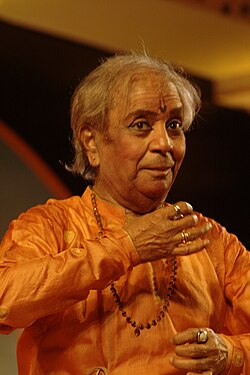
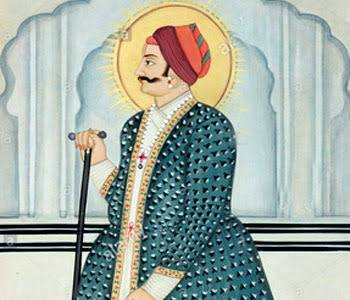
The Hasta mudras are significant hand gestures that dancers make while performing. The word ‘Mudra’ is derived from Sanskrit, where the verb ‘mud’ means ‘pleasure’ and its suffix ‘ra’ means ‘to give’.
The sacred texts of Bharata Muni’s Natyashastra, Acharya Nandikeshwara’s Abhinaya Darpan, etc., have mentioned detailed information about “Hasta-abhinaya’ (hand gestures). These mudras play a pivotal role in depicting emotions, narratives, and explaining concepts of performance!
If you are also passionate to learn about the Kathak mudras, this article is for you! I have discussed about origin of Hasta Mudras, their types, and how to do them in easy words.
Let us move ahead to know these mudras in detail.
Origin Of Kathak Hand Mudras
Around 200 BC, Sage Bharat Muni extracted information from the Vedas and wrote the sacred book of Natyashastra. This book was a comprehensive treatise on the performing arts.
It rooted the foundation of Indian classical dance forms. And Kathak was one of them! It had detailed information on Hand Mudras, their techniques, etc.
Acharya Nandikeshwara took inspiration from Natyashastra and Sangit Samayasar. Around the 4th century AD, he wrote a Sanskrit treatise on classical Indian dance, named the ‘Abhinaya Darpana’ (also known as ‘The Mirror of Gesture’). It had a chapter called ‘Angika Abhinaya’. It explains the techniques of hand mudras.
3 Main Types Of Kathak Hand Mudras
Natya Shatra has 62 Hasta Mudras. They are divided as: 24 Asamukyta Hasta Mudras, 13 Samyukta Hasta Mudras, and 27 Nritta Hasta Mudras.
Abhinaya Darpana consists of 55 Hasta Mudras. It combines as: 32 Asamyukta Hasta Mudras and 23 Samyukta Hasta Mudras.
For ease of understanding, I have categorized these hand gestures in three main types:
 Asamyukta Hasta (Single Hand Gestures)
Samyukta Hasta (Joint Hand Gestures)
Nritta Hasta (Hand Gestures in Technical Dance)
Let us learn about each of them below:
Asamyukta Hasta(Single Hand Gestures)

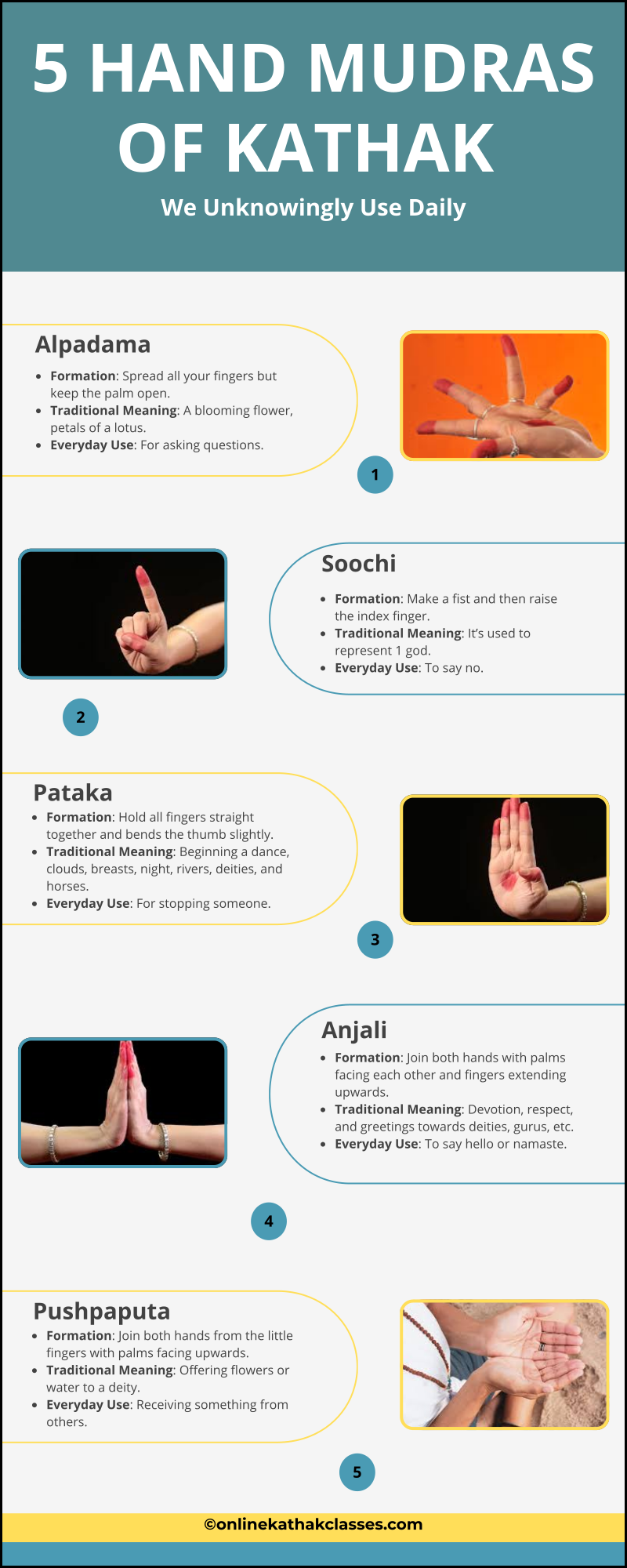
It is a single-handed gesture where the dancer holds all fingers straight together and bends the thumb slightly. It is also known as ‘flag’ or ‘banner’. This Mudra is used to represent things such as beginning a dance, denial of objects, clouds, breasts, night, forest, rivers, deities, and horses.

When the ring finger is bent in Pataka Hasta, a Tripataka forms. It symbolizes a tree, a crown, a pigeon, a lamp, fire, etc.
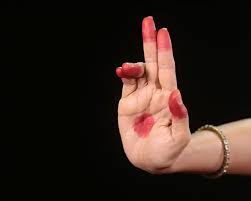
It forms when the little finger of the Tripataka hasta is bent. It signifies ‘two’ or ‘both’. It also denotes a leaf, the bank of a river, a knife, a horn, a tower, etc.
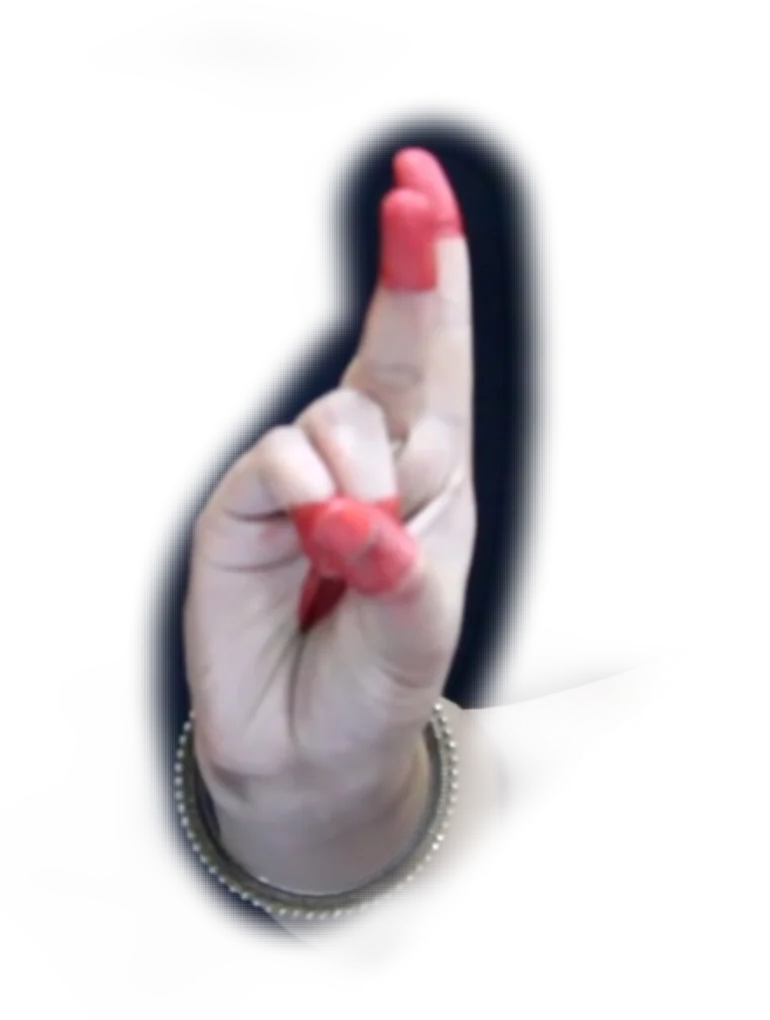
Make Ardhapataka and spread index finger and little finger to form Kartarimukh mudra.
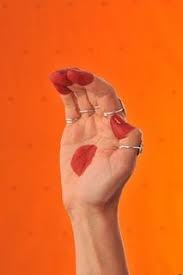
In this Mudra, the fingertips of a Pataka hasta are bent to create a hollowed palm. This gesture symbolizes a snake’s hood, a movement in an elephant’s trunk, nourishment, the arms of a wrestler, sprinkling water, slow movements, Sandalwood paste, etc.
It is known as ‘the deer’s head Mudra’. In this Mudra, all fingers, except the thumb and little finger, are bent from the knuckles. It is also formed when the little finger and thumb are stretched upright in the Sarpsheesh Mudra.
It symbolizes a woman’s cheeks, an animal’s head, a wheel, clothes, etc. It is used to depict a temple or express fear, love, calling, or longing for someone.

This Mudra forms when the little finger in Sarpasheesh Mudra is stretched and made straight (in a 90-degree angle). It is used to depict number six, swans, a bridge, and the actions of engraving nails, covering something, etc.
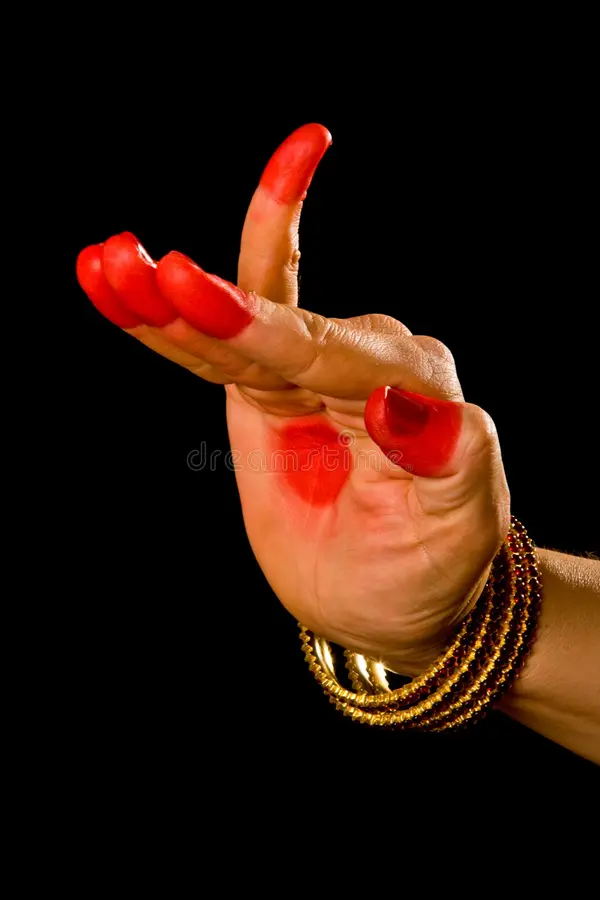
This Mudra forms when fingers are slightly curved and held together to resemble a tiger’s paw. It denotes a tiger’s strength, courage, power, ferocity, predatory nature, and agility.
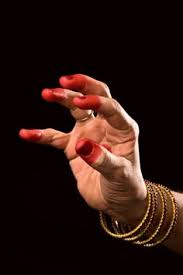
This mudra is also known as the imhamukha mudra. It forms when the middle and ring fingers are bent to touch the thumb, while spreading the index and little fingers. This mudra symbolizes Lord Narasimha- an incarnation of Vishnu, lion’s face, a rabbit, etc. It is used to show fire, sacrifice, preparation of a medicinal concoction, or movement of Darbha grass.

It is formed by touching the ring to the thumb and extending the other three fingers. It represents a peacock’s head, dispersing water, a creeper, or a bird.
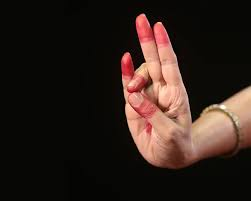
Palli mudra forms when the index finger in Mayur Hasta Mudra is placed behind the middle finger. It signifies a village, a hut, or a slum.

To form this mudra, bend the index finger and touch it to the base of the finger. Also, touch the middle finger to the tip of the finger. Extend the little and ring fingers. This Mudra represents a bee, a cuckoo, a parrot, a heron, etc.
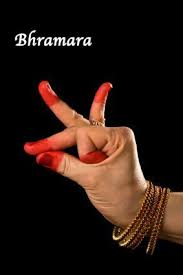
Outstretch your thumb and extend the other four fingers to create a half-crescent moon shape. It symbolizes femininity, ornaments, beauty, actions like bathing or grabbing by the neck, etc.

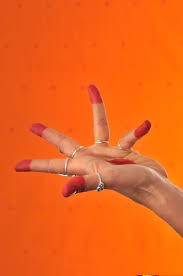
To form this Mudra, spread all your fingers but keep the palm open. It represents a blooming flower, petals of a lotus, makeup, a full-grown flower, the action of asking why, a mirror, etc.
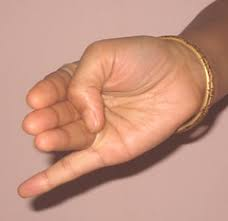
To form Chatur mudra, extend the little finger and place the thumb base of the ring finger, with the index and middle fingers joined together.
To form this mudra, slightly spread all your fingers and bend them inwards. It symbolizes bud, bowl, flower, fruit, blooming flower, actions of offering puja, eating, etc.

Make Padmakosh mudra and bend the ring finger inward. It denotes monkey fruit, bangle, etc.
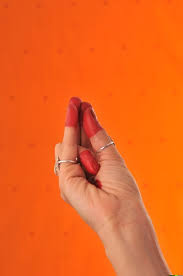
In Sandansh/ Sanamsha Mudra, all fingers are extended, brought together, and gently separated repeatedly. It symbolizes fear, worry, the number five, worship, etc.

To form this mudra, bring the index and middle fingers together to the thumb. Raise the little finger and ring finger upwards. It represents actions like plucking flowers, gazing, speaking, holding a garland, biting, etc.
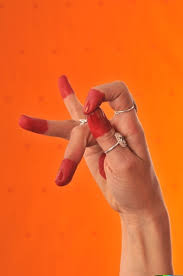
Make a fist with all four fingers and place the thumb on them. It signifies firm actions.
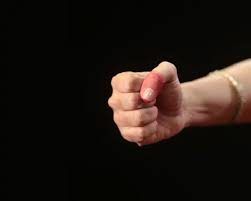
Make Mushti mudra and lift the thumb in an upward direction. It symbolizes Kamdeva, aim, determination.
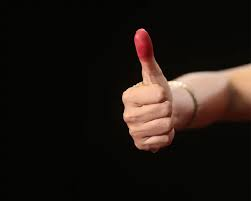
Keep the palm in Kapitt Hasta, bend the first finger, and put it on your thumb to form Kapitt mudra. It symbolizes goddesses Lakshmi and Saraswati holding a veil (dupatta).
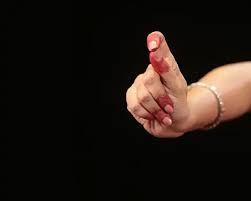
Make Kapitt hasta and place the middle finger along the index finger.

Make Katkamukha hasta and raise the index finger. It’s used to represent one god, one world, or refusal.
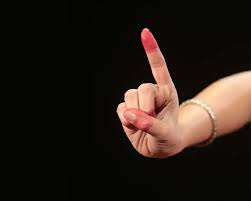
Make Soochi hasta, stretch your thumb outwards to make Chandrakala! It symbolizes a half moon on Lord Shiva’s head.

It forms when the index finger is bent in Pataka hasta.

Make Aral hasta and place index finger on thumb to form Hansaasya mudra. It symbolizes candle light, swan, goose, etc.
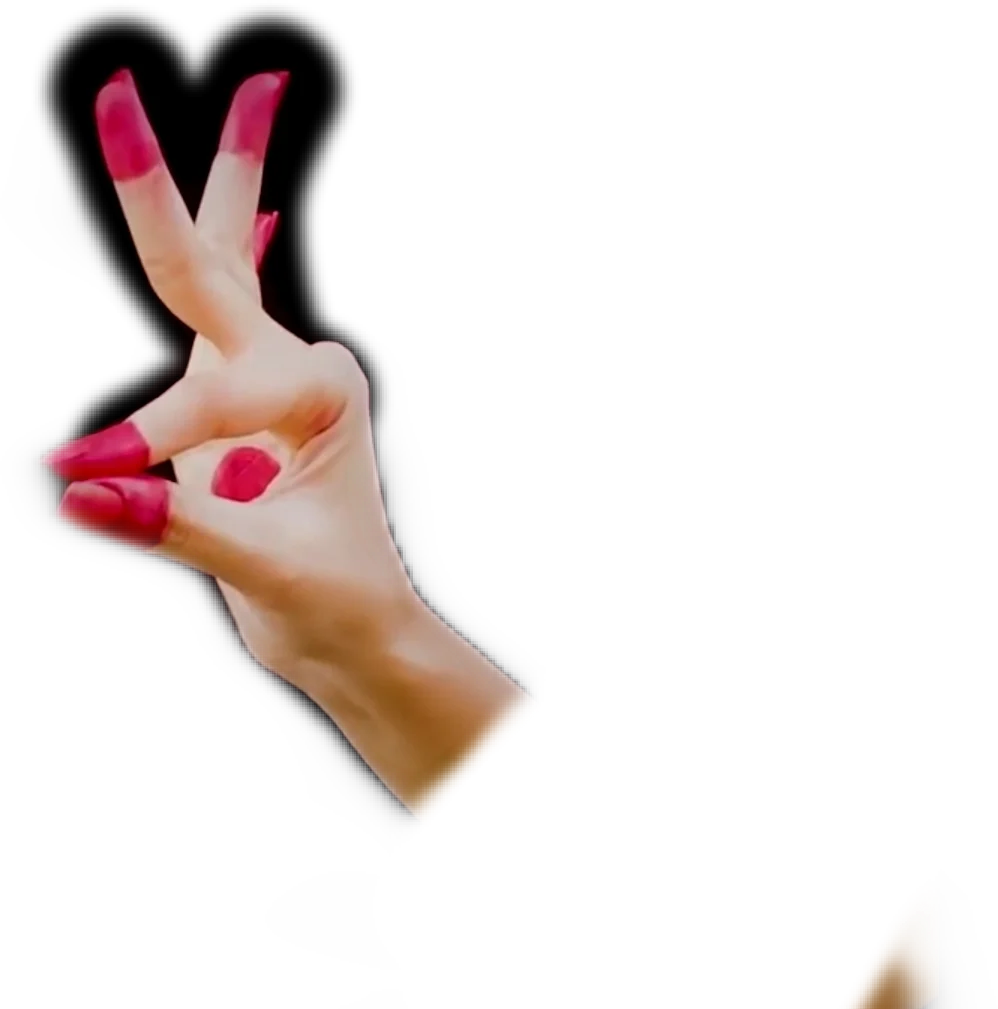
Join all fingertips to form Mukul hasta. It symbolizes food, a lotus flower, etc.

In Mukul mudra, raise the index finger to form Tamrachud mudra. It denotes camel, chicken, etc.

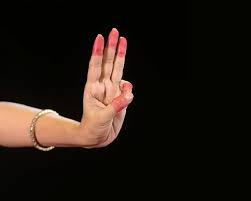
Join the thumb and little finger and extend the remaining three fingers to form Trishool mudra. It represents the Trishul- the weapon of lord Shiva, and the concept of the Trinity- Brahma, Vishnu, and Mahesh.
Samyukta Hasta Mudra(Joint Hand Gestures)
When you hold both hands in Pataka hasta and keep them aside your thighs, the Dola hasta mudra forms. It is used at the beginning of a dance performance, to welcome someone, etc.

To form this mudra, cross two Pataka hands at the wrists. This mudra is used to represent conflict, doubt, praise, etc.

To form this mudra, cross the hands in Kartarimukha mudra at the wrists. It represents nature’s elements, such as trees’ branches, mountain peaks, etc.

This is a salutation mudra that forms when you join both hands together with palms facing each other and fingers extending upwards. It represents devotion, respect, and greetings towards deities, gurus, etc.
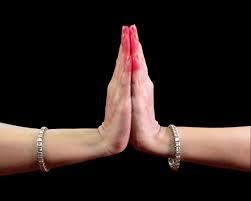
To form this mudra, join both hands at the wrists and slightly bend the fingers to create a cup resembling a dove’s head. It symbolizes acceptance, obedience, devotion, and respect for teachers.

When you interlock and stretch the fingers of both hands, the Karkata mudra forms. It represents the arrival of people, the sight of a belly, stretching limbs, etc.
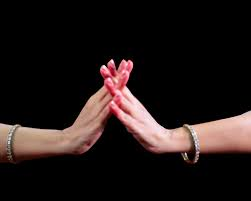
The word ‘Pushpa’ means ‘flowers’, and the word ‘puta’ means ‘cavity’. To form this mudra, join both hands from the little fingers with palms facing upwards. It signifies the action of offering flowers or water to a deity.

Place hands on the opposite shoulders in a Mriga Sheersha hasta mudra and overlap hands in front to form this mudra. It symbolizes teaching, embracing, togetherness, etc.
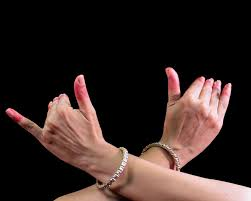
Cross two Katakamukha hands at the wrist in a Swastika formation, the Katakavardhana mudra forms. It represents nuptial bonds, worshipping, etc.
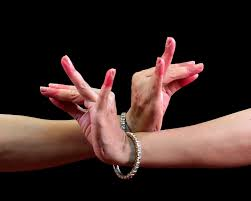
Create Ardhachandra mudra, cross wrists, interlock thumbs, and face palms inwards to form a shape like wings. It represents the bird ‘Garuda’- the eagle mount of Lord Vishnu.

Form Kapitt hasta in both palms and cross the wrists to form ‘Bherundra’.

Make the Sarpsheesh in both palms and place them in the Swastika form.

Place one palm over the other and spread the thumbs to form a shape like a ‘fish’.

Make Samputa Hasta in both palms, open little fingers and index finger, and spread them. This mudra denotes tortoise, turtle, etc.

Make Soochi mudra, interlock the index fingers together, and slightly bend hands to form this mudra. It signifies rivalry, fight, etc.

Make Mrigasheesh mudra in both palms and interlock their little fingers to form Keelak mudra. It also denotes love and devotion.
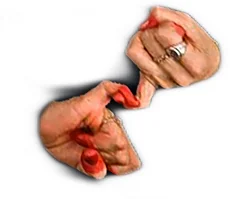
Create Shikhar hasta with the right hand and put it on the left palm, making Ardhachandra hasta.

Place the thumb of the right palm on the left palm. Wrap this thumb with the fingers of your left hand. Join the thumb with fingers. This mudra denotes a corn shell.
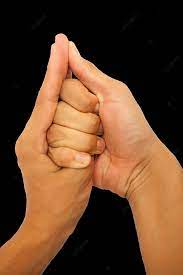
Make Ardhachandra mudra, one on top of the other. Face the palms towards each other in a Swastika form to create the Chakra hasta. It represents the sun, wheel, etc.

Make Chakra mudra and bend fingers fully. Hold one palm with another palm. It is used when dancers make Tatkaars.

Make Chatur mudra in both palms. Place them on top of another and separate the index finger and thumb to form Khatwa mudra.
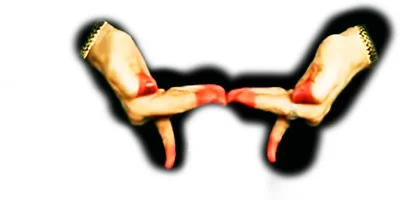
Make Bhramara mudra in both palms and separate the middle fingers from the thumbs to form Shakata mudra. It denotes demons, evil, etc.
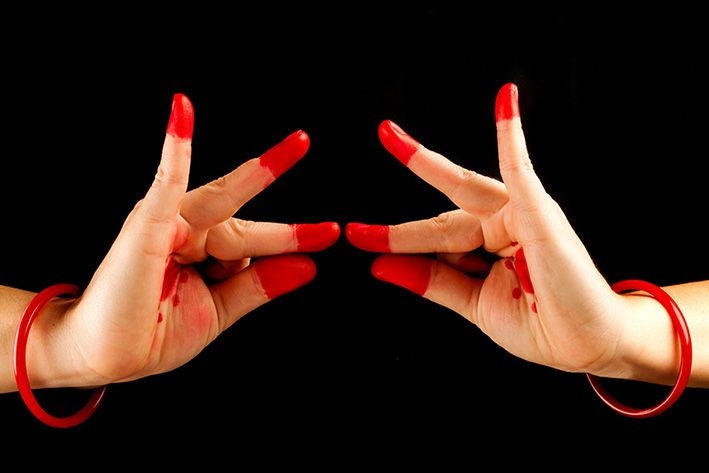
Make Mrigasheesh mudra, put your one hand on the other, and spread the little fingers and thumbs. It symbolizes a pig.
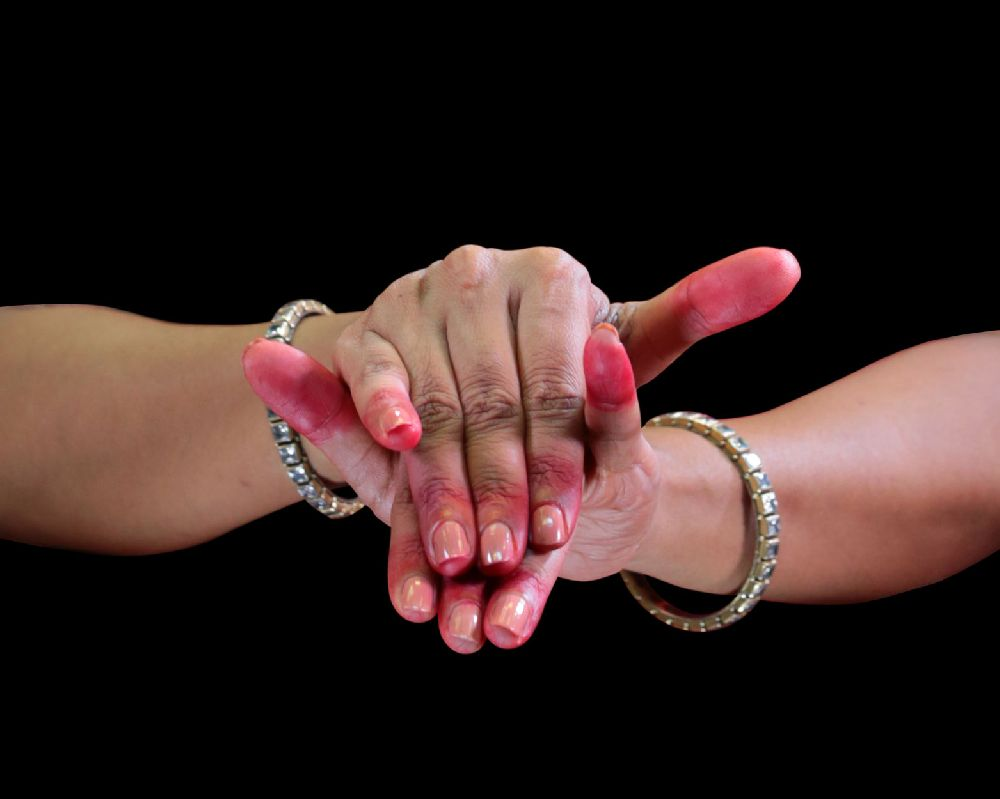
Nritta Hasta(Hand Gestures in Technical Dance)
Put your hands in ‘Hamsapaksha’ mudra and move them in a fan-like motion.
Extend all five fingers, place the thumb at the base of the third finger, and extend the little finger. It represents gold, copper, iron, sweetness, etc.
To form this mudra, keep the Hanspaksha mudra in the Chaturasra mudra, in a tilted way but facing each other.
Keeping Talamukha mudra in a Swastika form creates the ‘Swastik’ mudra.
Rapidly twist two Hanspaksha mudras and extend the palms upwards to form this mudra.
To form this mudra, keep the left hand in Chturastra mudra and right hand in rechita mudra.
To form this mudra, touch the shoulders and elbows of the opposite arm in an oblique motion using both hands. Make aral mudra in both palms and move them up and down.
To form this mudra, keep the palm in Alpadma hasta in upward direction. Gently, change it to Padmakosha hasta.
Make Sarpasheesha mudra of two palms and touch their middle finger and thumb to form Soochimookh mudra.
Join two Pataka mudras from the wrist to create Pallav mudra.
Make pataka hasta in both palms and move both hands from the shoulders in upward direction to form Nitamb mudra.
Make two Tripataka mudras diagonally. Then, tilt and move the shoulders and elbows.
Make Tripataka mudra in both palms. While keeping the mudra, keep one palm on the waist and the other on the head.
This mudra forms when you flip the Pakshvanchitak mudras.
Keep both hands diagonally and spread them on both sides to form Lata mudra.
How Did Hand Mudras Evolve In Kathak?
Initially, the temple performers used to present Hasta Mudras in a simple, direct, and sharp form during Katha Vachan (story narration).
In the Bhakti Movement, most of the Krishna devotees added a graceful, soft, and aesthetic feel to these hand gestures.
The founder of Lucknow gharana, Ishwari Prasad, was a Krishna devotee. He introduced the ‘Shringar Ras’ in hand gestures to make it more romantic and delicate. They had natural grace, rounded arms, slow transitions, and fluid movements.
The Mughal influence added Nazakat/ elegant soft wrist movements and curvilinear arm positions. Dancers used these delicate hand gestures with Urankhat (gliding movements).
Conclusion
Every kathak hand mudra tells a story! It is a unique vocabulary of kathak that denotes emotions! Each mudra has a specific meaning. These mudras help dancers to communicate and present complex ideas and stories easily without saying words.
When combined with intricate footwork, Laya, music, beats, and ghungroos, these Hasta mudras make the performance more expressive.