India is a country full of diverse culture and classical arts! This applies to music, folk art, traditions, language, and dance, too!
They say, Bharatnatyam and Kathak are two peas in a pod! Both classical dance forms emerged from the ‘Natya Shastra’. It is a sacred book that describes various classical Indian dance forms! Both dance forms celebrate Indian culture and rich history. But, if we go in-depth into these two dance forms, we will learn that these two are poles apart from each other! Yes, they do have some similarities, though!
In this article, I have shared 5 key differences between Kathak and Bharatnatyam dance forms that everyone must know. These two dance forms differ in origin, costume, hand gestures (Mudras), footwork, makeup, expressions, and more. If you want to discover all of these points, this article is for you.
So, let us move ahead and learn more about them!

What Is Kathak?
Kathak is one of the 8 classical dance forms. It was founded in North India. This dance form involves storytelling using rhythmic footwork, expressive gestures, and harmonized fluid movements.
This dance form is passed via the ‘Guru-Shishya’ tradition. It is divided into three Gharanas: Lucknow, Banaras, and Jaipur. Raighar is a newly found Gharana in this dance form.
The word ‘Kathak’ was derived from the Sanskrit word ‘Katha’. Katha means ‘Story’. Kathakar means storyteller. The performers depict stories from Hindu mythological stories, such as the Mahabharata, the Ramayana, etc.
What Is Bharatnatyam?
Bharatanatyam is an Indian classical dance that originated in the Tanjore district of Tamil Nadu, southern India. This dance form is popular for its structured footwork, expressive eye movements, angular hand movements, and story narration! A traditional Bharatnatyam dance follows a seven to eight-part order of presentation. This set is called Margam.
It is one of the oldest dance forms (almost 2000 years old)known to date. Historically, the Devdasis (women who were dedicated to temple service) used to perform Bharatnatyam on Carnatic music.
The Kanchipuram Shiva temple has significant carvings that have been dated to the 6th to 9th century CE. Those carvings suggested that this dance was a well-developed art around the mid-1st millennium CE.

5 Main Differences Of Kathak And Bharatnatyam
| Kathak | Bharatnatyam |
| Founded in the North Indian states like Banaras, Lucknow, and Jaipur. | Founded in Tamil Nadu, South India. |
| Originated around 400 BC. | Originated around 200-250 BC. |
| Hindustani classical music is mainly used in these performances. | Carnatic music is mainly used in these performances. |
| Mainly depicts stories of lord Krishna and Radha | Mainly narrates the mythological stories of Lord Shiva. |
| Dancers commonly wear swirly dresses, Lehengas, skirts, jackets, Chunris (veils), kurta-pajamas, etc. | Dancers normally wear draped pure silk sarees (female) or Dhotis (male) |
| Dancers maintain standing postures throughout the performances with harmonized hand gestures. | This dance form involves a fixed upper torso, bent legs, and flexed knees (Aramandi). |
| It involves fluid movements and fast spins. | It involves angular movements and structured footwork. |
Kathak
Kathak originated in the North Indian regions of Lucknow, Banaras, and Jaipur. Kathakars were the dancers who depicted mythological stories through their performances. These stories were taken from the great epics of the Mahabharata and the Ramayana. Initially, they used to dance in temples. Later, Mughal kings hired them for dancing in their courts.
Bharatnatyam
The Devadasis used to perform classical dances for deities in temples of Tamil Nadu. This dance was called ‘Dasiattam’ in the Natya Shastra around 500 BC, it later evolved into the dance ‘Bharatnatyam’. This dance form was described in the ancient Tamil epic ‘Silappatikaram’ ( around 171 CE). It was a spiritual expression of worshiping Lord Shiva, Maa Parvati, etc. Its dance moves symbolize South Indian religious themes and divinity in Hinduism and Jainism.
Kathak
Female Kathak dancers wear costumes such as Lehengas, long skirts, sarees, Orhani (chunris), long-sleeved blouses, jackets, etc. Male dancers wear a Dhoti, a sleeveless jacket, a kurta, etc. These costumes are selected according to the Hindu or Muslim type of Kathak.
These swirly outfits add an aesthetic appeal to their performances during quick spins and fast footwork.
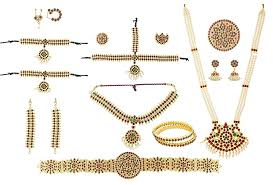
They also wear bangles, Mangtika, Kamarpatta, armbands, nose rings, Long and short necklaces, Ghungroos, long earrings like Jhumka, etc.
Both male and female characters wear makeup using eye kohl, eyeliner, mascara, blush, eye shadow, lip color, etc.
Bharatnatyam
Female Bharatnatyam dancers wear traditionally stitched sarees in skirt-style or pajama-style. They mostly wear pure silk sarees with golden Zari work. This saree’s front pleats are the main attraction in the whole outfit. The skirt-style outfit resembles the dress of a Tamil Hindu bride.
Male dancers wear silk dhotis with the same pleat patterns. The pleats spread beautifully when the dancer bends her knees or sits on the floor, in poses like ‘Arai mandi’ and ‘Muzhu mandi’ (half and full sitting positions, respectively.)
In pajama-style costume, small and large fans are added to cover and enhance the front portion of the outfit. Likewise, Kamar Band, a piece of fabric, is added on the back of the Pajama to cover the hips.
They also wear silk blouses to cover the upper part of the body. It has the same color as the saree.
They also wear accessories to enhance the appeal of the outfit. They wear:
 Mangtika, Mattal, Chandran(moon-shaped ornament), and Suryan (sun-shaped ornament), Kunjalam (tassel), fake long braids, Jadai Billalu (braid ornaments), flower garlands of Jasmine.- Head accessories.
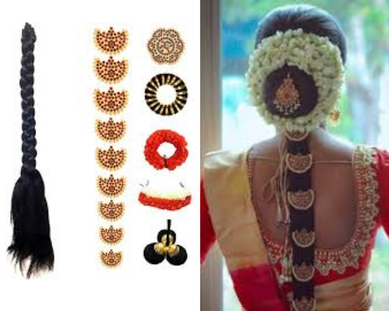
Jhumka: bell-shaped earrings and Mattal: a long chain that goes back of the ear.
Malas- long and short necklaces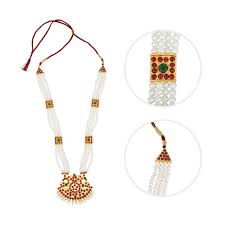
Vaanki- armbands
Kamar Patta or Oddiyanam- waist belt
Salangai/ Ghungroos- bells on anklesThey also cover the outline of their hands and feet with red kumkum powder or alta. This helps the viewers easily observe their hand and foot gestures.
Kathak
This dance is mostly performed to Hindustani classical music, such as Thumri, Ghazals, and other lyrical song forms. Musical compositions like Tukde, Toda, Paran, Tarana, etc., are also used in different Layas(tempos).
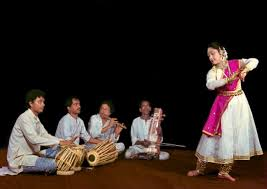
Musical instruments, including the Tabla, Sitar, Cymbals, flute, Dholak, Pankhwaj, etc., are used to add rhythmic beats to the songs. These elements enhance the surreal experience of the dance performance.
Bharatnatyam
Carnatic music is preferred for Bharatnatyam dances. The songs are from languages such as Sanskrit, Tamil, Kannada, or Telugu. Those songs may be devotional or regional. These songs are based on historical or mythological stories. A Nattuvanar is the main vocalist in this dance form.
Instruments such as the Kanjra, Violin, Venu, Tambura, Manjira, Surpeti, Mridangam, Veena, Nadaswaram (a long type of oboe made from black wood), Nattuvanagam (cymbals), etc., are used in this dance form.

Kathak
These dancers have fluidity in their postures. They perform smooth transitions with flawless spins (Chakkars) using their upper body. A combined movement of hand gestures, tatkars, Chakkars, and expressions beautifies and adds grace to the overall Kathak performance.
Bharatnatyam
This dance form involves a definite posture with a straight back and with still upper body. They bent their knees to create a diamond shape, which is called ‘Aramandi’ or ‘Ardhamandala’.
When a Bharatnatyam dancer stands straight with feet together and hands on hips, it is called the ‘Samam’ or ‘Samapadam’.

This enhances sharp and angular movements in the performance. These performances include abstract movements in geometric and balanced patterns.
Kathak
This dance form involves intricate footwork on the beats of the Tabla. They involve rapid stamping of the feet, leading, which is called the ‘Tatkars’.
With the sound of Ghungroos, tatkars create complex rhythmic patterns in the dance. The ghungroos enhance the auditory experience of the overall performance.
Bharatnatyam
These dancers perform strong, grounded moves while maintaining a bent-knee posture (aramandi). The footwork in this dance is called the ‘Adavus’. The structured footwork in Adavus adds Talas (rhythmic cycles) and Layas ( tempos) to the performance.
Tatta Adavu (flat-foot strike) and Natta Adavu (heel strike) are two main Adavus of Bharatnatyam.
11 Similarities Of Kathak And Bharatnatyam
Both males and females can learn and perform these two dance forms.
Both dance forms are derived from the Natya Shastra book.
Dancers depict stories through their performances in these two Indian dance forms.
Dancers from both dance forms convey spiritual messages and depict stories of Hindu deities, like Lord Krishna, Radha, Lord Shiva, Parvati Ji, etc.
Both dance forms are based on themes of love and devotion to Hindu gods and goddesses.
Both dance forms involve intricate footwork and rhythmic patterns.
Both dance forms were banned during the British Raj Era in India. But the performers kept practicing their dance form in secret.
Performers from both dance forms received patronage and support from temples and royalty.
In both dance forms, ankle bells, aka Ghungroos, are tied around the dancers’ ankles.
Performers in both dance forms use their eyes and hand gestures- Mudras, to express their emotions during the performance.These mudras have two types: 28 Samyukta Mudra (single hand gestures) and 23 Asamyukta Mudra (double hand gestures).

Conclusion
These two dance forms are unique in their own way. They carry a rich cultural heritage throughout the generations. They became similar in storytelling, narration through expressions and hand Mudras, and devotional references. Both dance forms developed in temples, but in different parts of India. The devotional scripts from great epics like the Mahabharata, Ramayana, the Geeta, etc., were used for these two dance styles.
I hope you have found the necessary differences between Kathak and Bharatnatyam dance forms in this article!
Kathak comprises free upper body movements, intricate footwork, and royal courtly elegance! On the other hand, Bharatnatyam is full of abstract moves, angular hand and foot gestures, and traditional themes!
Even though they are different from each other, their dancers have kept the richness of Indian culture alive throughout the years! Both dance styles have become an influential face of India at the global levels!
Which dance form do you like the most? And why? I would love to hear your views in the comments!