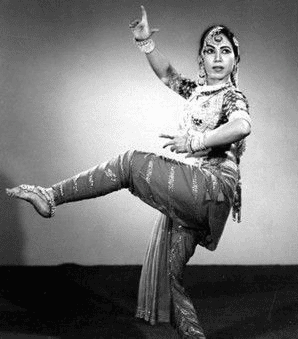
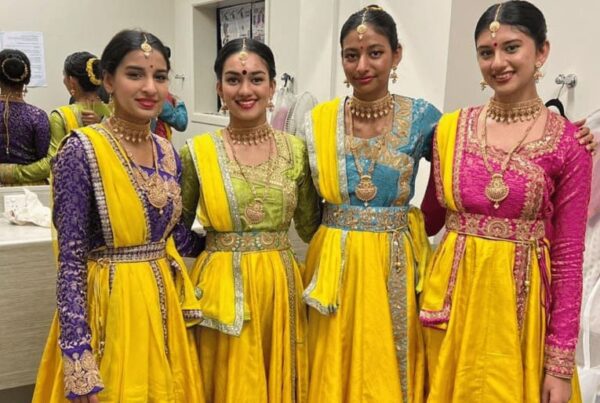
Gharana means ‘Home’! For kathak, it means a traditional lineage-based school where you can learn kathak in specific styles and techniques from legendary Gurus (teachers).
Kathak started in temples to express the artist’s devotion to gods and goddesses! In the Mughal era, it got glorified for entertaining royal members of the Mughal, Nawab, and Rajput courts. At that time, three gharanas were established- Banaras, Lucknow, and Jaipur, which were distinct in their style, performance, and expressions. Raighar gharana was found later. Coming from different regions, these gharanas have maintained the diversity of their style and technique for many years.
In this article, we will learn about the most important Kathak gharanas in India. So, if you are a kathak enthusiast, this article is only for you! We will learn about their origin, founders, famous players, style, and uniqueness. So, let us move ahead and learn more about these gharanas in detail:
Main Kathak Gharanas
A Quick Glance On The History Of Gharanas
Kathak gharanas have seen an inspiring journey throughout the years! Initially, it started with traveling bards in ancient northern Indian states. They were called the ‘Kathakar’ (storytellers).
Kathakars used to depict the mythological stories of Lord Krishna, Vishnu, Ram, Shiva, Ganesha, etc., through their dance performances in temples. Till then, the dance form had an influence of Hindu culture.
In the Mughal era, many Kathak artists were appointed as court dancers. Mughals tried to add a touch of Asian-Persian culture to stylize it. So, this devotional dance form got more sophisticated.
After the decline of the Mughal era, many court dancers relocated to the hubs of art and music like Lucknow, Jaipur, Banaras, etc. The Nawabs and Rajput Kings in these regions gave them patronage and royal support.
In the British Raj, dancing in Kathak style was banned. However, the artists continue to pass their dance skills to their children and disciples discreetly.
After the end of the British period, Kathak dancers got to breathe freely again. Now, its dance Gurus of different gharans started establishing official schools to give an institutional face to this iconic dance form.
This move opened gates to many passionate dancers to learn and spread Kathak in India and on a global level.
Let us see how each gharana was founded and grew
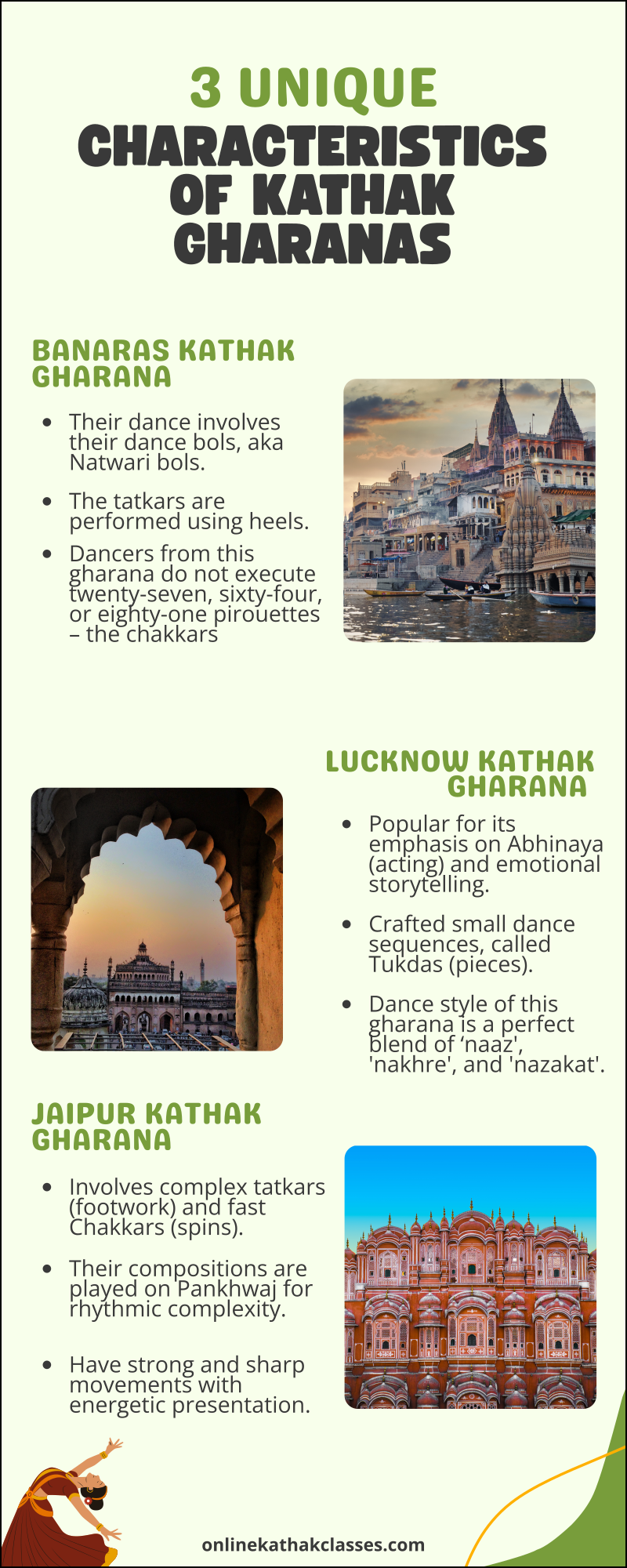
Banaras Kathak Gharana
This gharana has a perfect amalgamation of pure dance (nritta) and expressive dance (nritya)!
A dancer named Sanvaldas (or Shyamaldas) served in the courts of Maharaja Anup Singh of Bikaner (1669 – 1698). He was from the He and his family had the rare honor of being employed as mangalmukhi (Court dancers for auspicious occasions).
His descendant was Janaki Prasad, who was also proficient in dance since childhood. When he was 9, he was performing a dance on a floating plank of wood. The Maharani of Bikaner saw him. Impressed with his skills, she gave him patronage. She was fond of dance and composed devotional raas nritya among her women court dancers.
Janaki Prasad benefited from her patronage and delved deep into the study of Kathak. But, he wasn’t interested in being a court dancer for life. He was more religious and had a vision of taking Kathak closer to its devotional roots. So, he moved to Banaras!
With lifetime efforts of Janaki Prasad, the Banaras Kathak gharana is rooted in the holy city of Varanasi. He was devoted to lord Krishna and started teaching Kathak in his dance school. It later acquired the name ‘Banaras Kathak Gharana.’ It is also called the ‘Janaki Prasad Gharana of Kathak.’

He was a good Sanskrit scholar. He noticed that the Kathak at that time was based on compositions created for the tabla and pakhawaj. It means the dancers used to dictate their moves according to the sound of these instruments. They observed that this dance does not have its own language.
With his knowledge in Sanskrit, he studied the richas (couplets) of the Vedas and added new syllables to the dance vocabulary. They were called the ‘Natwari Bols’ (mnemonic syllables of Kathak dance). These smooth and free-flowing bols had 12 compositions (also known as Barakhadi). They were totally different from the bols of Tabla and Pankhwaj from the other two gharanas.
Apart from bols, the dancing style and body posture of this gharana were also different.
Janaki Prasad’s three main disciples: Chunnilal, Dula Ram, and Ganeshilal, passed down the Kathak knowledge to their children. The world-famous dancers, Sitara Devi Ji, Gopi Krishna, and Jitendra Maharaja, are from this gharana.
 Their dance involves their dance bols, aka Natwari bols. The barakhadi of these Natawari bols can help to create new bols.
Depending on the Bols, the dancers can dance in rhythmic patterns and intricate footwork.
The focus of dance is more on precision and synchronization with the Taal.
The tatkars are performed using heels. The dance continues on the ‘Thirkan’ with the bols having the ‘kat tarash’ (specific rhythmic pattern or sequence of footwork).
They have also given great importance to the Thaat. It helps the dancer to create a specific mood or atmosphere in the dance.
Each dance utilizes Abhinaya of saatvik and angika. It means the entire body and face of the dancer depicts a particular sentiment.
It is a spiritual dance form where dancers express a strong devotion to gods and goddesses from Hindu mythology. The stories from both Lord Krishna and Shiva are depicted. So, both Tandava and Lasya styles of dancing are emphasized in this gharana.
The dancers from this gharana do not execute twenty-seven, sixty-four, or eighty-one pirouettes – the chakkars.
The dancers properly use the floor and start footwork on the first beat of taal, the ‘sam.’
Lucknow Kathak Gharana
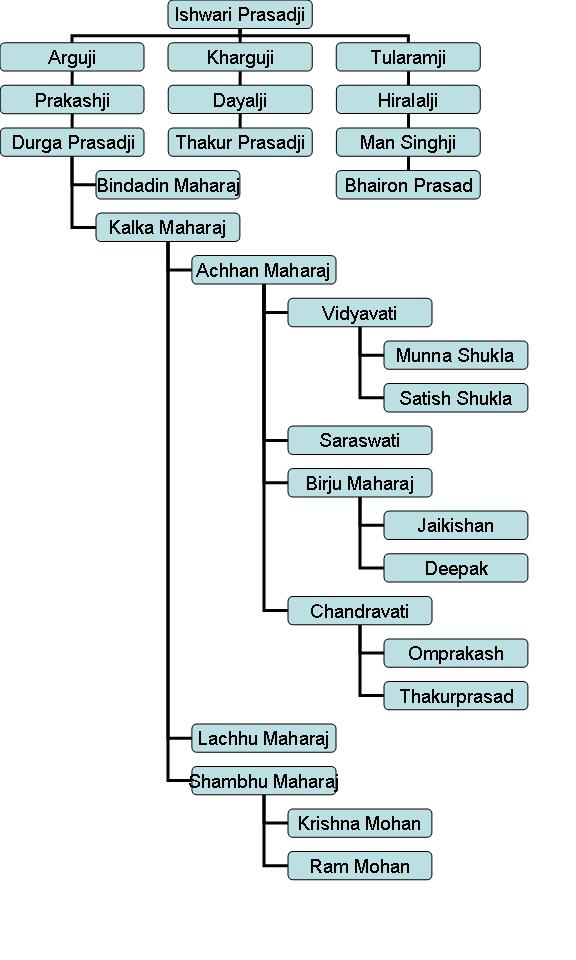
This gharana is also known as the ‘Purabb Gharana.’ This gharana developed in the courts of the Nawab of Oudh, Uttar Pradesh. A Sanskrit scholar and Krishna devotee named Ishwari Prasad Ji founded this gharana. He saw Lord Krishna in his dreams, where the lord told Ishwari to rejuvenate Kathak dance.
With this inspiration, he dedicated his whole life to this dance. He trained his three sons, Adguji, Khadguji, and Tularamji, till the age of 100. After the death of Ishwari at the age of 105, his son, Adguji, trained his three sons: Prakashji, Dayalji, and Harilalji.
 When the Mughal Empire declined, the Kathak artists moved from Delhi to Lucknow. The Nawabs of Lucknow gave patronage to these talented dancers.
Prakash Ji was appointed as Court dancer in the court of Nawab Asfudaulla. Prakashji had three sons: Durga Prasadji, Thakur Prasadji, and Manjii. Out of these 3, Thakur Prasadji was appointed as a ‘Guru’ of Nawab Wajid Ali Shah of Awadh.
Durga Prasadji had three sons: Shri Bindadinji, Shri Kalka Prasadji, and Shri Bhairon Prasadji.
At the age of 12, Bindadin Maharaj started training for Kathak. He practiced tatkaars for 12 hours a day, for four years. He composed 3000 thumris and developed beautiful bhav on them.
The pair of Kalka-Bindadin Ji was so famous among people! Bindadin Ji was famous for his poetic expressions, whereas Kalka Prasad Ji was famous for his rhythmic prowess. Kalka Maharaj’s three sons, Achhan, Lachhu, and Shambhu Maharaj Ji, were also exceptional Kathak dancers! This gharana has gifted us talented dancers such as Pandit Birju Maharaj, Sushmita Banerjee, Saswati Sen, Shri Krishna Mohan, Shri Ram Mohan, etc.
This gharana is popular for its emphasis on Abhinaya (acting) and emotional storytelling.
Its dance style involves graceful moves and conveying facial expressions.
The emotional depth and storytelling in the performance are enhanced with the help of Thumri, a semi-classical vocal form.
It has crafted small dance sequences, called Tukdas (pieces). The dancers focus on improving body gestures and expressiveness in these Tukdas.
There are many variations for the ‘Ta Thei Tat Thei’ in the Tukdas of Tatkar.
The bols of Tatkar are ‘Tigda Dig Dig’, where the dancers tap their feet 6 times.
Along with Tatkaars, the ‘That’ is also expressed distinctly.
It also involves specific dance phrases, such as a stylized walk, called the ‘Gat-Nikās.’
It has themes based on the drama works of Kalidasa's Shiva-Parvati and Bhavabhuti's Malati-Madhav.
For showing themes on love and devotion, the stories of Krishna Leela,
It also has a part of Hindu-Muslim Kathak fusion style due to the influence of Patronage from Nawab courts.
It also highlights themes of dharma, courage, and devotion from epics of Mahabharata and Ramayana.
The dance style of this gharana is a perfect blend of ‘naaz', 'nakhre', and 'nazakat'.Jaipur Kathak Gharana:
Shifting to the colorful region of Rajasthan, the Jaipur kathak gharana is famous for its powerful dance and footwork!
A famous Shiva Tandav dancer named Bhanuji visited Banaras. He taught Natvari Nritya to his disciples. His two grandsons, Laluji and Kanhuji, were also inspired by lord Krishna. They returned to Jaipur and started the Jaipur kathak gharana! Kanhu Ji’s descendants, Hanuman Prasad Ji and Hari Prasad Ji were famous as ‘Dev-Pari ka Jodaa’!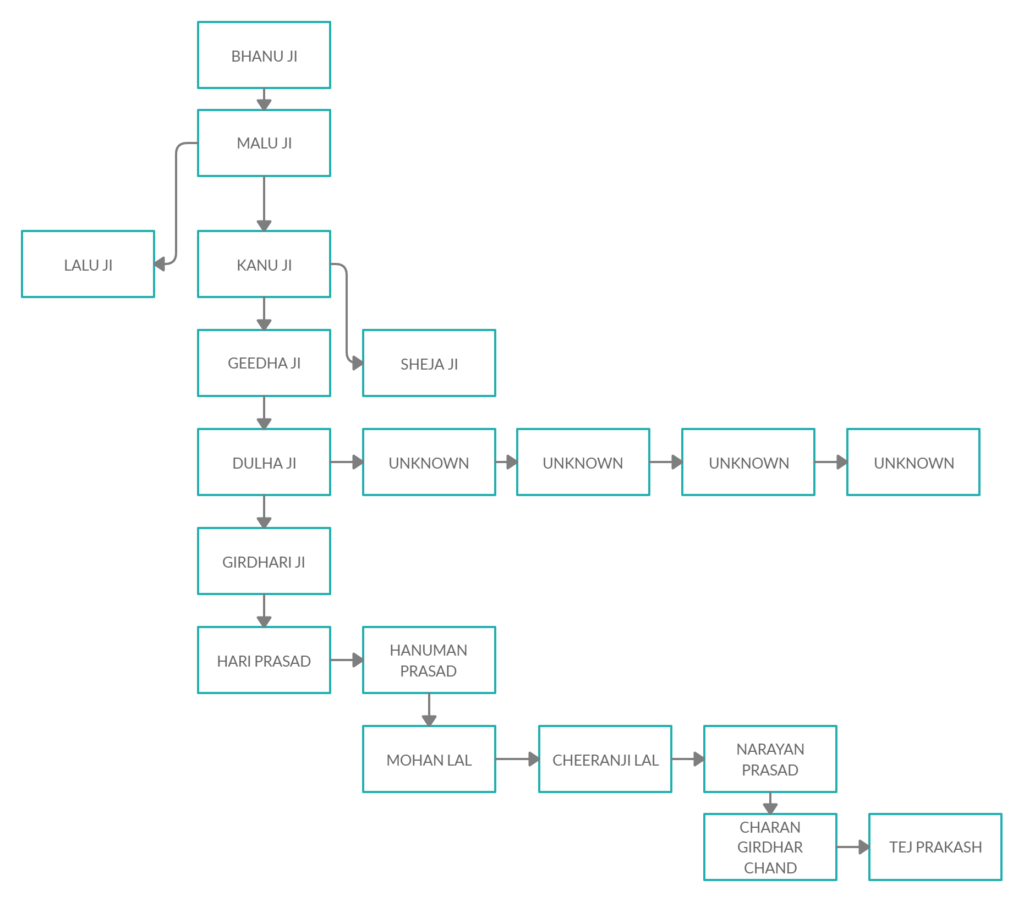 The Rajputi Sawai kings of Jaipur favored the Hindu religious themes in their Kathak style. So they sponsored these dancers to perform in the courts. That is why we can see the essence of Rajputi grandeur and bravery in the dance style of this gharana.
The Kachchawa king, Maharaja Sawai Jai Singh of Jaipur, started Gunijankhana for artists. Talented artists, dancers, and musicians of that time used to perform in this place. These rulers provided stipends and scholarships to such dancers. Sawai Jai Singh had appointed almost 750 artists, out of which some were Kathak dancers!
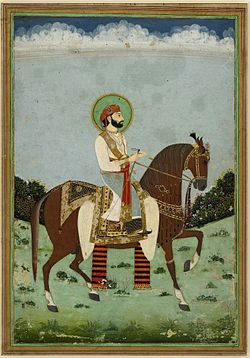
This king was a Vaishnav devotee. He also appointed Kathak dancers to perform in Jaipur’s famous Govind Deo Ji Temple. In this way, the legacy of Jaipur Kathak dancers flourished with the royal support from Sawai rulers.
This gharana has gifted us many talented dancers, such as Jai Lal, Janki Prasad, Kundan Lal, Puru Dhadeech, Mangla Bhatt, Rajendra Gangani, etc.
This gharana involves complex tatkars (footwork) and fast Chakkars (spins).
Their dancers can perform on intricate layakari (rhythmic pattern) and difficult Talas and bols.
They have strong and sharp movements with energetic presentation.
Their compositions are played on Pankhwaj for rhythmic complexity.
This gharana also involves both Nritta (pure dance) and Nritya (expressive dance).
Their main bols of tatkaars are ‘Ta Thai Thai Tat’.
The Kavitts (poems) are often used in their performances on life stories of lord Ganesha, Krishna, Shiva, Radha Krishna, etc.
Their performances show narrations from life stories of lord Krishna, such as Makhan Chori, Radha Krishna Ched Chad, Draupadi Chirharan, Kaliya Dahan, Giriraj Parvat; Lord Shiva’s Tandav, lord Ram’s Ahilya Udhar, Ravan Dahan, etc.Raighar Kathak Gharana:
This is the most recent gharana found! In the 20th century, the Raighar gharana thrived under the patronage of Maharaja Chakradhar Singh of Raigarh, Chhattisgarh. He was a passionate patron of the arts who sponsored many talented kathak dancers for his court!

Maharaja Chakradhar Singh patronized exponents from Lucknow, Banaras, and Jaipur gharanas in his court. He was a great exponent of Tabla, Pankhwaj, dance, and music! He blended the dance styles of three main gharanas. Soon, he invented the Raighar Kathak gharana during his reign (from 1924 to 1947)!
He appointed many respected performers to flourish Raighar gharana, like Pandit Jaggannath Prasad of Jaipur Gharana and Guru Kalaka Prasad from Lucknow Gharana.
This is why the Raighar gharana has a fusion of dance from the three main gharanas! It involves energetic movements of Jaipur gharana, devotional angle from Banaras gharana, and elegant grace of Lucknow gharana!
Its dance style also has elements from Mughal court dances, traditional temple performances, and folk performances of local regions. Famous dancers like Pt. Kartik Ram and Guru Kalyan Das took the kathak style from this gharana to a global level!
This gharana has its own compositions of unique thumris, ghazals, todas, and bols.
The Raighar gharana also has incorporated a dynamic range of instruments, like sitar, flute, and tabla.
Their dancers also focus on both pure dance, nritta, and expressive dance, nritya.
They focus on storytelling using elegant hand gestures and smooth facial expressions.
Their versatile dancers seamlessly transition between slow tempo (Ati Vilambit) and fast tempo (Ati Drut).
They include lyrical movements and captivating narrations through their performances.
Their Tatkaar (footwork) uses the basic bols of ‘Ta Thai Thai Tat, Aa Thai Thai Tat,’ ‘Thig Dha Dhig Dhig,’ and ‘Thaa Thai. ’
Along with devotion to lord Krishna, Shiva, this gharana also emphasizes strong roots in Chhattisgarhi folk dance.FAQs
Kathak Is Based On Which Lord’s Inspiration?
The performances in Kathak are mainly based on Lord Krishna, his childhood, his love for Devi Radha, and his bravery in the epic of Mahabharata. Some performances are also based on stories of lord Shiva, Mata Parvati, Lord Ram, and Lord Ganesha.
Who Is The Queen of Kathak?
Sitara Devi is called the ‘Kathak Queen.’ She is a famous dancer from Lucknow gharana. Her father Pandit Sukhdev Ji taught her Kathak at the age of 7. Rabindranath Tagore gave her the title of ‘Nritya Samrajni’ (Empress Of Dance).
What Is The Golden Age Of Kathak Gharanas?
After the decline of the Mughal era, the 19th century is considered the golden age of Kathak gharanas. Many patrons like Nawab Wajid Ali Shah, King of Bikaner- Maharaja Anup Singh, Sawai Kings of Jaipur, etc., appointed kathak dancers for their courts. These kings gave them royal support and stipend for their work.
Conclusion
All Kathak gharanas have a strong history of their origin, growth, and fame. Their founders put lifelong efforts to establish and shape each gharana. They studied sacred texts in the holy book of Natya Shastra, which led to the development of Kathak!
Thanks to the tradition of Guru-Shishya teaching and the patronage of rulers. This helped to keep this dance form alive for hundreds of years.
The Lucknow gharana is a master of grace and expression. The Banaras gharana focuses on energy and rhythm. The Jaipur gharana is rooted in its technical brilliance and powerful spins. And, lastly, the Raighar gharana is a fusion of lyrical moves, delicate gestures, and unique bols, taals, and tatkaars!
Which gharana do you like the most? Do let me know in the comments!